
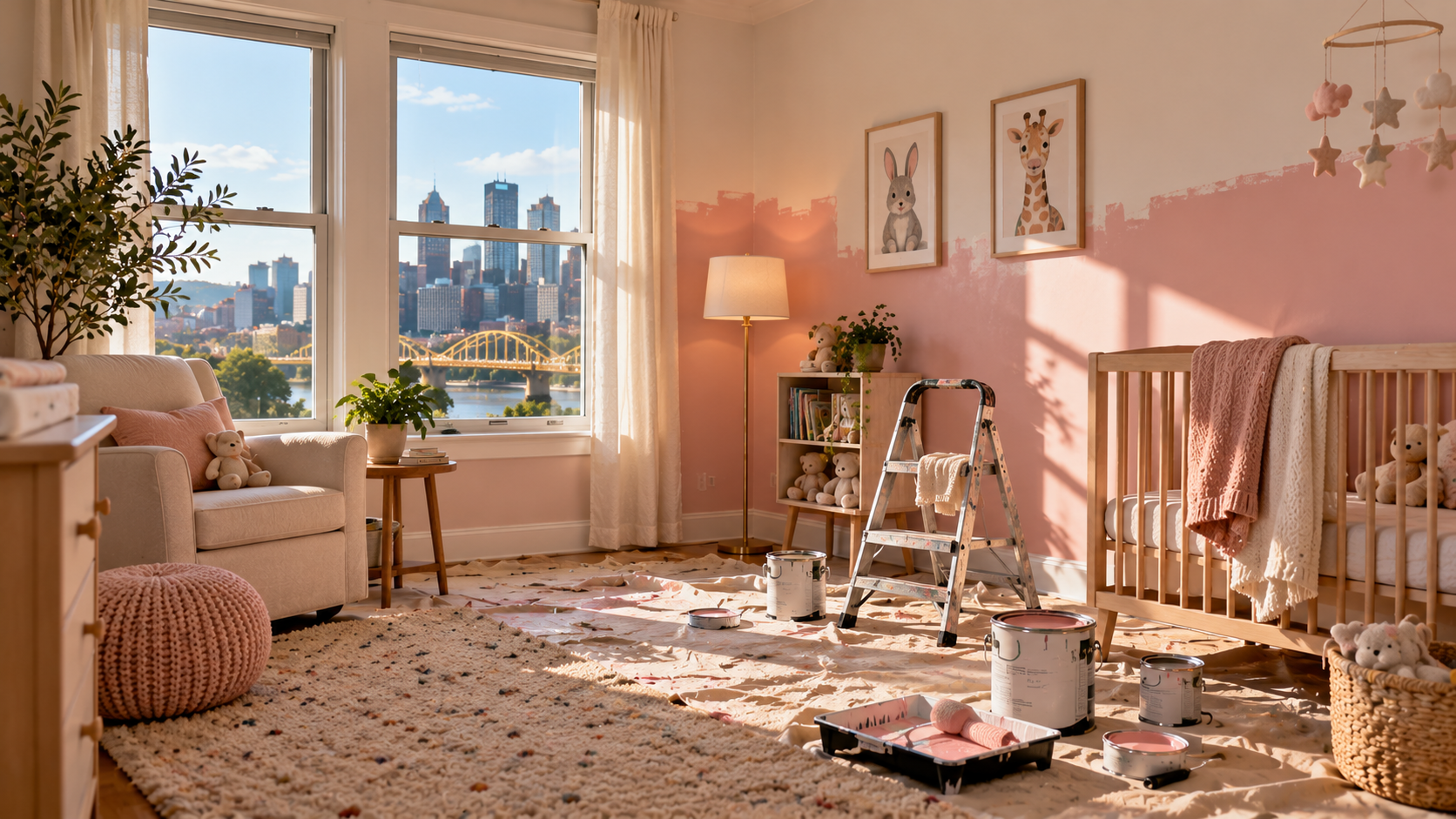
Painting is one of the most common requests renters make. A fresh coat of paint can transform a space, cover scuffs, and make an apartment feel like home. But painting a rental is not a decision to make without checking the rules first. In most cases, you need your landlord’s written approval before you buy a single can of paint.
This guide explains when painting is allowed, how to ask for permission, and the conditions landlords typically attach to approval.
Why You Need Permission
In Pennsylvania, a lease is a binding contract. Most leases include clauses that prohibit alterations to the property without the landlord’s consent. Painting counts as an alteration, even if the color is neutral. Painting without approval can result in a lease violation, and you may be required to restore the original color or pay for professional repainting at move-out.
The safest approach is to assume you cannot paint unless the lease says otherwise or your landlord agrees in writing.
What Landlords Typically Allow
Landlord policies on painting fall into three broad categories.
Refer a tenant, get $100
Know someone looking for a house or apartment for rent in Pittsburgh? If they sign a lease with us, we pay you $100.
Not allowed. Many landlords, especially larger property management companies, prohibit painting entirely. These properties often repaint units on a set schedule between tenants, and they want to maintain consistent colors and finishes.
Allowed with approval. Some landlords permit painting if you submit a request and agree to certain conditions. This is common with private landlords and smaller property owners.
Allowed under specific terms in the lease. A few leases include painting clauses that specify what is permitted, such as painting only in neutral colors or requiring the tenant to restore the original color at move-out.
How to Ask for Approval
If you want to paint, make your request in writing. A clear, professional request is more likely to be approved than a vague question.
Describe the scope. Specify which rooms or walls you want to paint. A single accent wall is often easier to approve than painting the entire apartment.
Specify the colors. Provide the exact paint colors, ideally with brand names and color codes. This shows the landlord you have a specific, considered plan rather than a general intention to change things.
Explain the benefit. If you are covering scuffs or stains, mention that. Landlords are often more open to painting when it addresses wear that would otherwise need to be handled.
Offer to restore or pay. Some landlords will approve painting if you agree to return the walls to their original color before you move out, or to cover the cost of repainting. Offering this upfront can move the conversation forward.
Ask about the paint type. Landlords may specify a finish, such as an eggshell or satin finish that is easy to clean. They may also require low-VOC paint for health and environmental reasons.
Common Conditions Landlords Attach
Even when a landlord approves painting, they usually attach conditions. Expect to see some combination of the following.
Neutral colors only. White, cream, beige, and light gray are the most commonly approved colors. Bold colors are often rejected because they can be difficult to cover.
Approval of specific shades. Landlords may approve a general color but require you to submit the exact shade for review.
Professional or quality work. Some landlords require that the painting be done professionally. Others allow tenant painting but expect proper preparation, priming, and clean edges.
Restoration at move-out. You may be required to repaint the walls to the original color before your lease ends. This can be a substantial cost if the rooms are large.
No damage to surfaces. If you paint over wallpaper, electrical outlets, or door hardware, you may be held responsible for the cost of repair.
Documentation. Some landlords ask for receipts for the paint used so they can match the color later for touch-ups.
What Happens If You Paint Without Permission
If you paint without approval, the landlord has several options. They can require you to restore the original color. They can deduct the cost of repainting from your security deposit. In serious cases, unauthorized alterations can be treated as a lease violation.
Under Pennsylvania security deposit law, landlords can deduct for damage beyond normal wear and tear. Unapproved painting that requires repainting to restore the original condition can fall into that category.
Should You Paint at All?
Painting is worth pursuing if you plan to stay for a while and want to make the apartment feel like your own. It is less worth the effort if you expect to move within a year, if the landlord is reluctant, or if the conditions make restoration costly.
If the landlord says no, there are alternatives. Removable peel and stick wallpaper, large art pieces, and textiles can change the look of a room without permanent alteration. These options let you personalize the space without risking your deposit.
Key Takeaways
| Aspect | What to Know |
|---|---|
| Permission required | Yes, in almost all cases |
| Best way to ask | Written request with specific colors and scope |
| Common conditions | Neutral colors, quality work, restoration at move-out |
| If unapproved | Lease violation, deposit deductions |
| Alternatives | Removable wallpaper, art, textiles |
Painting a rental is possible when you approach it the right way. Ask first, put your request in writing, specify the colors and scope, and be prepared to accept the conditions your landlord sets. With clear communication and written approval, you can make your apartment feel more like home without putting your security deposit at risk.

Renting in the Pittsburgh area?
Ultrarix Capital Partners manages houses and apartments for rent across the Greater Pittsburgh area. Browse what is available now, or learn more about renting with us.
Browse available rentalsHouses and apartments for rent in Pittsburgh
Common questions about renting in Pittsburgh
How do I find houses and apartments for rent in Pittsburgh?
Start on our available rentals page, or see an overview of houses and apartments for rent in Pittsburgh. Tell us your budget and preferred neighborhoods and we will match you with homes that fit.
Which areas around Pittsburgh do you serve?
We cover the Greater Pittsburgh area, including city neighborhoods and nearby communities like Bellevue, McKees Rocks, Penn Hills, and Verona. The full list is on our homepage.
How do I apply for a rental?
Find a home you like on the rentals page and submit an application with your details, income, and rental history. We review it quickly and follow up with next steps.
Are utilities included?
We typically do not include utilities. For most rentals, electric, gas, water, and trash are the tenant's responsibility. Each listing notes anything that is included.
Do you allow pets?
Pet policies vary by property. Some rentals allow pets, sometimes with a deposit or monthly pet rent. Check the listing or ask us about a specific home.
Can I refer someone and get paid?
Yes. If you refer a tenant who signs a lease with us, we pay you $100. See our referral page for details.
How do I contact Ultrarix Capital Partners?
Call +1-650-254-6706 or email [email protected]. We are a Pittsburgh based property management company at 725 School St, McKees Rocks, PA 15136.