
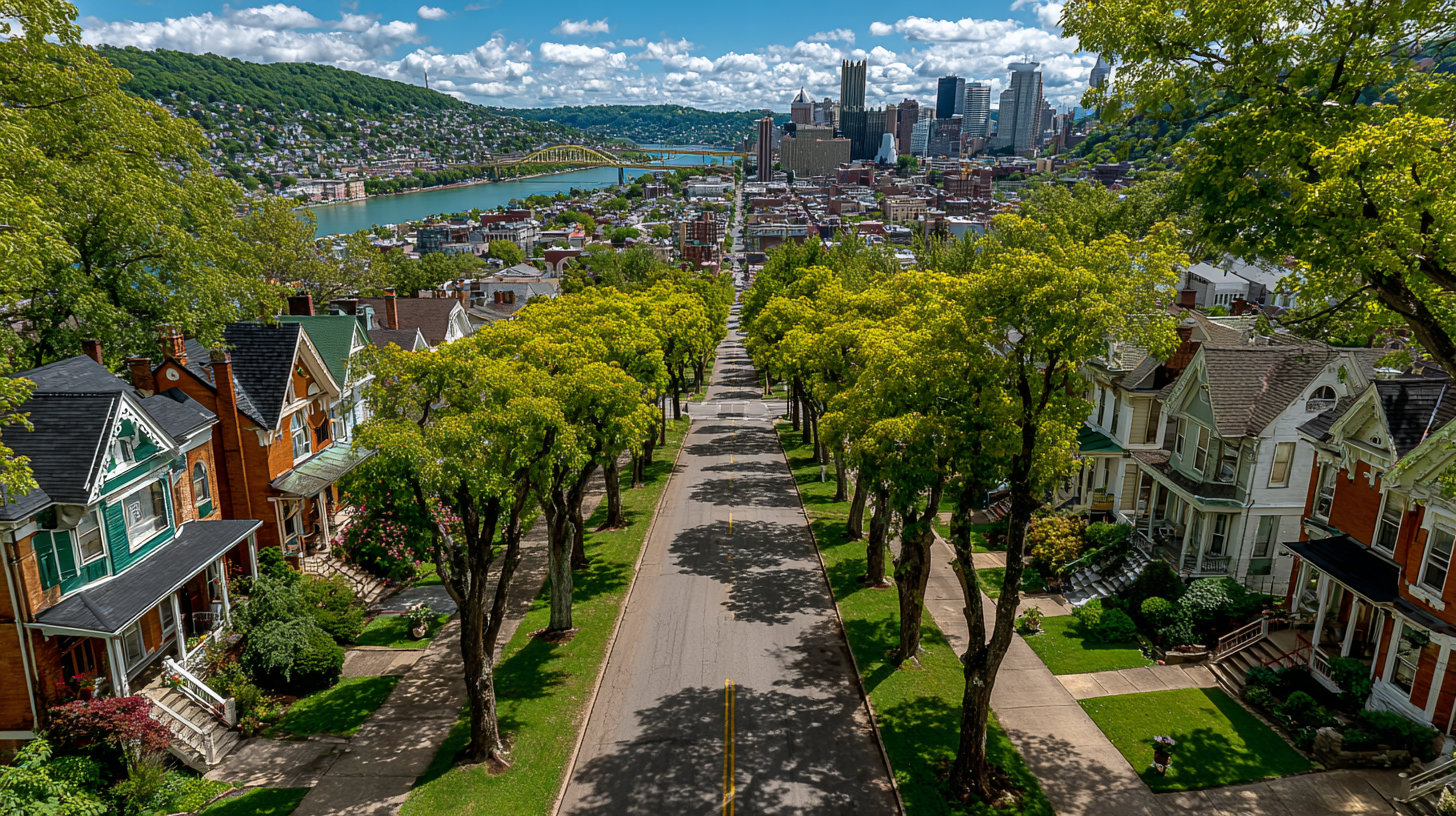
For renters seeking a residential neighborhood that balances urban convenience with access to nature, Highland Park offers one of Pittsburgh’s most appealing options. Located just east of the city’s East End, this neighborhood of approximately 8,000 residents is defined by its namesake park, tree lined streets, and a pace of life that feels removed from the bustle of nearby commercial districts while remaining connected to the city’s core.
Highland Park appeals to renters who prioritize green space, quiet residential streets, and a strong sense of community. For those willing to live a short distance from the dining and shopping of East Liberty, Shadyside, and Larimer, the neighborhood offers a distinctive living environment centered around one of Pittsburgh’s finest parks.
The Highland Park Neighborhood
Highland Park is primarily a residential neighborhood, characterized by its historic homes, quiet streets, and the 378 acre park that gives the area its name. The neighborhood developed in the late 19th and early 20th centuries as a streetcar suburb, and much of its housing stock dates from that period, giving the area a cohesive architectural character.
Location and Boundaries
Highland Park is located east of the East End, bordered by the Stanton Heights neighborhood to the north, the Morningside neighborhood to the east, East Liberty to the south, and Larimer to the west. The neighborhood’s eastern edge is defined by Highland Park itself, one of Pittsburgh’s largest and most significant green spaces.
Commute and Accessibility
The drive from Highland Park to downtown Pittsburgh typically takes 10 to 15 minutes via Washington Boulevard or the East Liberty corridor. The neighborhood also provides convenient access to East Liberty, Shadyside, and Oakland via local streets. For those who prefer public transit, Port Authority bus service connects the neighborhood to downtown, East Liberty, and other destinations.
Highland Park: The Namesake Green Space
The centerpiece of the neighborhood is Highland Park, a 378 acre park designed by Edward Bigelow, the same landscape architect who created Pittsburgh’s city park system. The park is the defining feature of the area and a primary reason renters choose the neighborhood.
Park Amenities
Highland Park offers a range of recreational amenities that serve residents of all ages:
- Swimming pool: The park features a large outdoor swimming pool that is popular during summer months.
- Athletic fields: Baseball and soccer fields provide space for organized sports and casual play.
- Tennis courts: Multiple tennis courts are available for public use.
- Walking trails: Paved and unpaved trails wind through the park, offering opportunities for walking, running, and hiking.
- Playgrounds: Several playgrounds serve families with young children.
- Pittsburgh Zoo and PPG Aquarium: The zoo and aquarium are located within the park’s boundaries, a unique amenity for neighborhood residents.
The Reservoir
The Highland Park Reservoir, located within the park, is a distinctive feature. While no longer used for drinking water, the reservoir area provides open space and walking paths with views of the surrounding city.
Seasonal Events
The park hosts community events throughout the year, including the annual Highland Park Community Festival, farmers markets, and seasonal celebrations. These events contribute to the neighborhood’s sense of community.
The Rental Market
The rental housing stock in Highland Park reflects the neighborhood’s history and residential character. Rather than large luxury complexes, Highland Park offers a collection of smaller scale properties integrated into established residential streets.
Converted Historic Homes
A significant portion of Highland Park’s rental inventory consists of older single family homes that have been converted into multi unit apartments. These properties are scattered throughout the neighborhood’s residential streets, often occupying lots with mature trees and established landscaping. Units in these buildings typically retain historic character elements such as hardwood floors, high ceilings, and front porches.
The conversion of homes into apartments means that rental units are often found in neighborhoods where owner occupied homes also exist, creating an integrated residential environment.
Smaller Apartment Buildings
In addition to converted homes, Highland Park has a collection of smaller apartment buildings, typically ranging from four to twelve units. These buildings are concentrated along the neighborhood’s main corridors, including Bryant Street and Highland Avenue. They offer one and two bedroom units with varying levels of updates and amenities.
Garden Style Complexes
Highland Park has a limited number of garden style apartment complexes, primarily located on the periphery of the neighborhood. These properties offer features common to suburban apartment living, including dedicated parking and on site maintenance.
Rental Prices
Rental rates in Highland Park are generally moderate compared to nearby neighborhoods like Shadyside and Lawrenceville. One bedroom apartments typically range from $900 to $1,400 per month, while two bedroom units range from $1,200 to $1,800. Three bedroom units, common in converted homes, range from $1,500 to $2,200.
For context, comparable units in Shadyside typically rent for $1,400 to $2,200 for one bedrooms and $1,800 to $3,000 for two bedrooms. Highland Park offers significant savings while providing a more residential environment.
Residential Character
Highland Park has a distinct character shaped by its park, its housing stock, and its community orientation.
Neighborhood Feel
Highland Park has a strong sense of community. The neighborhood’s residential streets are quiet and tree lined, with sidewalks that invite walking. The pace of life is slower than in more commercial neighborhoods, appealing to renters who want to come home to a peaceful environment.
Demographics
Highland Park attracts a mix of long term residents, families, young professionals, and renters. The neighborhood has a more diverse age range than student-dominated areas, creating a stable community character. This mix appeals to renters who want a neighborhood with a sense of continuity.
Architecture
The neighborhood is known for its historic architecture, including Victorian, Edwardian, and early 20th century homes. Many of these homes have been converted into apartments, allowing renters to enjoy the character of these buildings without the responsibilities of homeownership.
Bryant Street Business District
Highland Park has a small but functional commercial district along Bryant Street, near the intersection with Highland Avenue. This area features a collection of local businesses including a grocery store, pharmacy, coffee shop, and several dining options. For residents living within walking distance, daily errands can be accomplished on foot.
Practical Considerations for Renters
Before selecting Highland Park as a rental location, potential residents should consider several practical factors.
Walkability and Car Dependency
Highland Park offers a middle ground in terms of walkability. The Bryant Street commercial district provides basic services within walking distance for residents in the surrounding area. However, the neighborhood lacks the extensive retail options of Shadyside or East Liberty. Most residents maintain a car for broader shopping and regional travel.
Parking
Parking in Highland Park is generally more available than in denser neighborhoods. Many properties offer off street parking, and street parking is less competitive than in areas closer to commercial districts. For renters with vehicles, this is a significant advantage.
Rental Inventory
The rental market in Highland Park is modest in size. Because the neighborhood consists primarily of smaller buildings and converted homes, the number of available units at any given time is limited. Renters interested in Highland Park should allow time in their search and should be prepared to act when a suitable property becomes available.
Property Variability
Given the age and diversity of Highland Park’s housing stock, properties can vary significantly in condition and amenities. Renters should inspect each unit carefully and clarify what is included in terms of parking, utilities, and maintenance responsibilities. The best value often comes from well maintained properties in established buildings.
Schools
For renters with children, Highland Park is served by Pittsburgh Public Schools. Families should evaluate the district’s offerings in the context of their educational priorities. The neighborhood is within proximity to the Pittsburgh Zoo and other family amenities.
Comparing Highland Park to Other Options
For renters considering Highland Park, it helps to understand how it compares to alternative locations in the region.
Versus Shadyside
Compared to Shadyside, Highland Park offers lower rental rates, a quieter residential character, and direct access to a major park. Shadyside provides a more extensive commercial district and greater walkability. The choice between the two often comes down to whether the amenities of Shadyside justify the premium rates.
Versus East Liberty
Compared to East Liberty, Highland Park offers a more residential character and lower rental rates. East Liberty has undergone significant revitalization with new retail, dining, and apartment developments. The choice between the two depends on whether the renter prefers a quiet residential environment or a revitalizing commercial district.
Versus Morningside
Compared to Morningside, the adjacent neighborhood to the east, Highland Park offers similar residential character with the added amenity of the park. Morningside has slightly more moderate rental rates but less direct access to green space.
Versus Lawrenceville
Compared to Lawrenceville, Highland Park offers a quieter environment and more residential character. Lawrenceville has a vibrant dining and nightlife scene but higher rental rates and more challenging parking. The choice between the two depends on lifestyle preferences.
Who Should Consider Highland Park
Highland Park is best suited for renters who:
- Value access to green space and outdoor recreation
- Prefer a quiet, residential environment
- Want a neighborhood with a strong sense of community
- Appreciate historic architecture and character
- Have a car or are willing to drive for broader shopping
- Seek moderate rental rates compared to nearby neighborhoods
Making the Decision
Highland Park serves renters who prioritize green space, quiet living, and community character over commercial amenities and nightlife. For those who want to come home to a peaceful residential street and have a major park as their backyard, it represents one of Pittsburgh’s most appealing options.
The neighborhood works well for families who value access to the zoo, park, and playgrounds. It suits professionals who want a quiet environment after work and are willing to drive a short distance for dining and shopping. It accommodates renters who appreciate historic architecture and a sense of community.
For renters considering Highland Park, visiting the neighborhood during weekdays and weekends provides a complete picture. Walking through the park, exploring the Bryant Street business district, and experiencing the quiet residential streets helps determine whether the character aligns with personal preferences. For many renters in the Pittsburgh region, Highland Park offers a distinctive combination of quiet living and exceptional green space.