Home Blog Page 17

Is Pittsburgh Still Affordable in 2026? A Rent Analysis for Renters

For years, Pittsburgh has been known as one of the most affordable cities in the northeastern United States. Low rents, reasonable home prices, and a manageable cost of living attracted newcomers from more expensive metropolitan areas. But as the city has grown, added new development, and gained national attention, the question arises: Is Pittsburgh still affordable in 2026?

This analysis examines current rental trends, compares prices across neighborhoods, and helps renters understand what to expect when searching for an apartment in Pittsburgh this year.

The Short Answer

Pittsburgh remains significantly more affordable than most major East Coast cities. However, affordability has eroded in certain popular neighborhoods and for certain property types. Renters willing to live outside the trendiest areas or in older buildings can still find good value. Those set on luxury new construction in the Strip District or Lawrenceville will pay premium prices.

The city offers a wide spectrum of rental options. A one bedroom apartment can cost anywhere from $800 in an affordable neighborhood to $2,500 in a luxury building. This range means that affordability is still available, but it requires knowing where to look.

Rental Price Trends 2020 to 2026

Over the past six years, Pittsburgh’s rental market has seen steady increases, though the pace has moderated recently.

2020 to 2022: The pandemic brought a surge of remote workers seeking affordable cities. Pittsburgh saw increased demand, particularly for apartments with home office space and outdoor access. Rents rose approximately 5 to 8 percent annually during this period.

2023 to 2024: New construction deliveries in the Strip District, East Liberty, and Lawrenceville added inventory, moderating price increases. Rents stabilized in some neighborhoods while continuing to rise in others.

2025 to 2026: The market has found a new equilibrium. Luxury units continue to command premium prices, while older buildings in moderate neighborhoods have seen modest increases. Overall, rent growth has slowed to approximately 3 to 4 percent annually.

The table below shows estimated one bedroom rent changes in select neighborhoods.

Neighborhood2020 Avg Rent2023 Avg Rent2026 Avg Rent6 Year Change
Strip District$1,600$1,900$2,000+25%
Lawrenceville$1,200$1,550$1,650+38%
Shadyside$1,300$1,650$1,800+38%
Squirrel Hill$1,100$1,400$1,500+36%
Dormont$800$1,000$1,100+38%
Greenfield$750$950$1,000+33%

Lawrenceville, Shadyside, and Dormont saw the largest percentage increases as demand for these neighborhoods grew. The Strip District already had high rents in 2020, so the percentage increase was lower though the dollar increase was substantial.

Affordability by Neighborhood in 2026

Premium Neighborhoods (One Bedroom $1,500 and Above)

The Strip District, downtown, North Shore, Lawrenceville, and Shadyside fall into this category. These neighborhoods offer walkability, dining, nightlife, and often new construction. Renters here pay for location and amenities.

In these areas, affordability depends on perspective. For a renter relocating from New York or San Francisco, $1,800 for a one bedroom in Lawrenceville feels like a bargain. For a local renter on a Pittsburgh salary, that same apartment may be out of reach.

Moderate Neighborhoods (One Bedroom $1,000 to $1,500)

Squirrel Hill, South Side, Oakland, East Liberty, Dormont, and Ross Township fall into this category. These neighborhoods offer good locations at more attainable prices. Some, like Dormont, offer T light rail access to downtown. Others, like Squirrel Hill, offer walkable commercial districts.

This range represents the best value for many renters. The neighborhoods are established, safe, and convenient without the premium prices of the trendiest areas.

Affordable Neighborhoods (One Bedroom Under $1,000)

Greenfield, Carnegie, Bellevue, Crafton, Millvale, and Highland Park fall into this category. These neighborhoods offer functional housing in residential settings with reasonable commutes to downtown.

Renters in these areas typically live in older buildings with basic finishes and limited amenities. However, the savings are substantial. A renter who pays $900 in Greenfield instead of $1,800 in Lawrenceville saves $10,800 per year.

Factors Affecting Affordability in 2026

New Construction Premium

New luxury buildings command significant premiums over older buildings. A one bedroom in a new Strip District building rents for $2,000 to $2,300. A one bedroom in a 1920s building in the same neighborhood, if available, would rent for significantly less. Renters who prioritize modern finishes and amenities pay for them.

Parking Costs

Parking adds $50 to $200 per month to housing costs in many neighborhoods. In premium areas, garage parking is often an additional fee. In affordable neighborhoods, parking is frequently included or available at lower cost. Renters should factor parking into their total monthly outlay when comparing apartments.

Utility Costs

Older buildings, which dominate affordable neighborhoods, often have higher heating costs due to less efficient windows and insulation. A $900 apartment with $150 monthly winter heating bills may cost as much as a $1,000 apartment with $50 heating bills. Renters should ask for average utility costs.

Transit Access

Neighborhoods with T light rail or frequent bus service offer the opportunity to eliminate downtown parking costs. A renter in Dormont paying $1,100 for rent but taking the T to work may spend less overall than a renter in a $1,000 apartment who drives and pays $200 for parking.

Salary Needed to Rent Comfortably in 2026

Using the guideline of spending no more than 30 percent of gross income on rent, the required annual salary for different rental levels is:

Monthly RentAnnual Salary Needed (30% rule)Typical Neighborhood
$800$32,000Greenfield, Carnegie
$1,000$40,000Dormont, Bellevue
$1,200$48,000Squirrel Hill, South Side
$1,500$60,000Lawrenceville, Shadyside
$1,800$72,000Strip District, North Shore

Pittsburgh’s median household income is approximately $70,000. This suggests that the average household can comfortably afford a one bedroom in the moderate to premium range. However, individual circumstances vary significantly.

Is Pittsburgh Still Affordable Compared to Other Cities?

Yes, Pittsburgh remains substantially more affordable than most major US cities. The table below shows one bedroom rents in select cities for comparison.

CityAverage One Bedroom Rent
New York City$4,200
Miami$2,600
Chicago$2,200
Philadelphia$1,900
Austin$1,800
Pittsburgh$1,550

Pittsburgh is approximately 25 percent less expensive than Philadelphia, 30 percent less than Austin, 40 percent less than Chicago, and 60 percent less than New York. For renters moving from higher cost areas, Pittsburgh still feels very affordable.

Where Affordability Has Eroded Most

The neighborhoods that have seen the largest rent increases since 2020 are Lawrenceville, Shadyside, and Dormont. Lawrenceville’s transformation from an industrial corridor to a dining destination drove demand. Shadyside’s established appeal continued to attract professionals. Dormont’s T access and walkable commercial district became more widely recognized.

In these neighborhoods, renters who secured units before the increases have benefited. New renters entering the market face higher prices.

Where Affordability Remains Strong

Greenfield, Carnegie, Bellevue, Crafton, and the West End have seen more moderate increases. These neighborhoods lack the dining scenes and nightlife of trendier areas, but they offer functional housing, reasonable commutes, and parking. For renters who prioritize budget over amenities, these areas remain strong options.

Predictions for the Remainder of 2026

The Pittsburgh rental market is expected to remain stable for the rest of 2026. Several factors support this outlook:

New construction continues. Several large apartment projects are under construction or recently completed, adding inventory to the Strip District, East Liberty, and Oakland. This supply helps moderate price increases.

Remote work patterns have stabilized. The influx of remote workers that drove early pandemic rent increases has slowed. Demand is now driven primarily by local employment growth rather than migration from coastal cities.

Interest rates remain elevated. High mortgage rates keep some potential homebuyers in the rental market, sustaining demand. However, this effect has been priced in over the past two years.

Overall, renters should not expect dramatic changes for the rest of 2026. Modest increases of 2 to 4 percent are likely in most neighborhoods.

Tips for Finding Affordable Rent in 2026

Be flexible on neighborhood. Expanding your search to include Greenfield, Carnegie, Bellevue, or Crafton rather than only Lawrenceville or Shadyside can save hundreds of dollars per month.

Consider older buildings. Units in buildings built before 1950 often have more space and lower rents than new construction. The trade off is older systems and fewer amenities.

Look for included parking. In neighborhoods where parking is included, you save $50 to $200 per month compared to apartments where parking is extra.

Calculate total monthly cost. Compare apartments based on rent plus parking plus estimated utilities. A $1,000 apartment with $100 parking and $150 heating may cost the same as a $1,200 apartment with free parking and $50 heating.

Use transit to save on parking. Renting near the T or a frequent bus line allows you to eliminate downtown parking costs. A $1,100 apartment in Dormont with free parking at home and no parking downtown may be a better value than a $1,000 apartment with paid parking at home and paid parking downtown.

Making the Decision

Pittsburgh remains an affordable city in 2026, particularly for renters who are flexible about neighborhood and building age. The city offers a wide spectrum of rental options, from $800 one bedrooms in residential neighborhoods to $2,500 luxury units in prime locations.

For renters moving from higher cost cities, Pittsburgh will feel very affordable. For local renters on Pittsburgh salaries, careful neighborhood selection is necessary to stay within budget. In either case, the city continues to offer good value compared to most major US metropolitan areas.

By understanding current price trends, focusing on neighborhoods that fit your budget, and calculating total monthly costs, you can find an apartment in Pittsburgh that meets your needs without breaking the bank. The city’s affordability is not what it was a decade ago, but it remains one of the best values in the northeastern United States.
Cost of Living in Pittsburgh vs Major US Cities: A Renter’s Perspective

For renters considering a move to Pittsburgh, understanding how the city compares to other major metropolitan areas is essential. Pittsburgh has long been known for its affordable cost of living relative to other large cities, particularly on the East Coast and in Florida. However, the gap has shifted in recent years as Pittsburgh’s rental market has grown while other cities have seen their own fluctuations.

This guide compares rental costs and overall cost of living between Pittsburgh and several major US cities, including New York City, Miami, Chicago, Philadelphia, and Austin. The focus is on what renters can expect to pay and how far their housing budget stretches in each location.

Overall Cost of Living Comparison

Pittsburgh consistently ranks as one of the most affordable major metropolitan areas in the northeastern United States. The overall cost of living in Pittsburgh is approximately 45 percent lower than in New York City, 20 percent lower than in Miami, and 10 percent lower than in Chicago. Housing costs drive most of this difference, though transportation and utility costs also contribute.
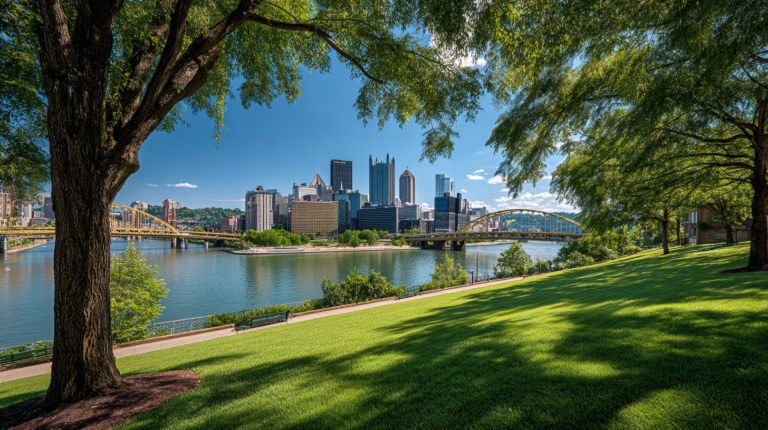
The table below provides a snapshot comparison for a single adult renter.

Expense CategoryPittsburghNew York CityMiamiChicagoPhiladelphiaAustin
Monthly rent (1 BR)$1,550$4,200$2,600$2,200$1,900$1,800
Monthly transit pass$97.50$127$130$75$96$60
Utilities (monthly)$180$200$190$160$180$170
Groceries (monthly)$400$500$480$430$420$410
Dining out (meal)$20$30$28$25$22$22
Gas per gallon$3.80$4.20$3.90$4.10$3.85$3.40

Figures are estimates based on 2026 cost of living data and may vary by specific location within each metropolitan area.

Pittsburgh vs New York City

The difference between Pittsburgh and New York City is the most dramatic of any comparison. New York City’s rental market is the most expensive in the country, with Manhattan commanding the highest rents.

Housing Costs

A one bedroom apartment in Manhattan averages $4,200 per month. Even in the outer boroughs, a one bedroom in Queens or Brooklyn averages $2,800 to $3,200. In Pittsburgh, the same budget would rent a luxury one bedroom in the Strip District or a spacious two bedroom in Shadyside.

For the price of a studio apartment in a desirable Manhattan neighborhood, a renter in Pittsburgh can secure a two bedroom apartment in Squirrel Hill with parking and in-unit laundry.

Other Costs

Beyond rent, nearly every expense is higher in New York City. Groceries cost approximately 25 percent more. Dining out is significantly more expensive. Childcare, healthcare, and transportation all carry premium prices. However, many New York residents do not own cars, eliminating vehicle expenses that Pittsburgh renters typically carry.

Quality of Life Trade Offs

New York offers unmatched public transit, cultural institutions, and career opportunities. Pittsburgh offers a slower pace, shorter commutes, and significantly more space for the money. For renters who prioritize affordability and quality of life over the energy of a global city, Pittsburgh is compelling.

Pittsburgh vs Miami

Miami’s rental market has seen significant increases over the past five years, narrowing the gap with other major cities. However, Pittsburgh remains substantially more affordable.

Housing Costs

A one bedroom apartment in a desirable Miami neighborhood such as Brickell or Coconut Grove averages $2,600 to $3,200 per month. A one bedroom in a more affordable area such as Kendall or Doral averages $1,800 to $2,200. In Pittsburgh, the same budget that rents a modest one bedroom in Miami would rent a two bedroom in a premium city neighborhood.

For the price of a one bedroom in Brickell, a renter in Pittsburgh could secure a luxury one bedroom with river views in the Strip District plus a monthly parking space and still have money left over.

Other Costs

Miami’s weather is a significant advantage for those who dislike cold winters. However, air conditioning costs are substantial during the long summer. Car insurance is notably higher in Florida. Groceries and dining out are comparable to Pittsburgh or slightly higher.

Quality of Life Trade Offs

Miami offers beaches, year round warm weather, and a vibrant Latin American culture. Pittsburgh offers four distinct seasons, lower housing costs, and a more compact, walkable urban core. For renters who prioritize affordable space and seasonal variety, Pittsburgh has advantages.

Pittsburgh vs Chicago

Chicago offers more urban amenities than Pittsburgh at a moderate premium. The comparison is closer than with New York or Miami.

Housing Costs

A one bedroom apartment in a desirable Chicago neighborhood such as Lincoln Park or Lakeview averages $2,200 to $2,800 per month. A one bedroom in a more affordable area such as Edgewater or Rogers Park averages $1,500 to $1,900. In Pittsburgh, the same budget that rents a one bedroom in a desirable Chicago neighborhood would rent a luxury one bedroom in the Strip District or a spacious two bedroom in Shadyside.

Chicago’s rental market offers more options at the lower end than New York, but Pittsburgh still maintains a clear affordability advantage.

Other Costs

Transit is actually less expensive in Chicago than in Pittsburgh, with a monthly CTA pass costing $75 compared to Pittsburgh’s $97.50. Groceries and dining out are comparable. Chicago’s winters are notably colder than Pittsburgh’s, with higher heating costs.

Quality of Life Trade Offs

Chicago offers world class architecture, lakefront access, and a massive transit system. Pittsburgh offers smaller crowds, easier navigation, and significantly lower housing costs. For renters who want big city amenities without the extreme costs of New York, Chicago is an alternative. For those who prioritize affordability above all, Pittsburgh wins.

Pittsburgh vs Philadelphia

Philadelphia and Pittsburgh are Pennsylvania’s two major cities, but their rental markets have diverged in recent years.

Housing Costs

A one bedroom apartment in a desirable Philadelphia neighborhood such as Center City or Fishtown averages $1,900 to $2,400 per month. A one bedroom in a more affordable area such as Manayunk or East Passyunk averages $1,400 to $1,800. In Pittsburgh, the same budget rents a comparable or larger unit in a similar quality neighborhood.

Philadelphia’s premium over Pittsburgh has grown as its rental market has tightened. Pittsburgh remains the more affordable option within the state.

Other Costs

Other cost categories are broadly comparable between the two cities. Transit, groceries, dining, and utilities are similar. The primary difference is housing.

Quality of Life Trade Offs

Philadelphia offers direct access to New York City and Washington DC via Amtrak, a larger arts scene, and more professional sports teams. Pittsburgh offers a more compact city, easier driving, and lower housing costs. For renters who want to stay in Pennsylvania but prioritize affordability, Pittsburgh is the clear choice.

Pittsburgh vs Austin

Austin’s explosive growth over the past decade has driven rents up significantly, though the market has cooled somewhat.

Housing Costs

A one bedroom apartment in a desirable Austin neighborhood such as Zilker or South Congress averages $1,800 to $2,400 per month. A one bedroom in a more affordable area such as North Loop or Riverside averages $1,300 to $1,700. In Pittsburgh, rents are comparable or slightly lower across the board.

The gap between Pittsburgh and Austin has narrowed as Pittsburgh’s rental market has grown and Austin’s has moderated. However, Pittsburgh still offers a modest affordability advantage.

Other Costs

Texas has no state income tax, which is a significant advantage for higher earners. However, property taxes are high, which affects renters indirectly through landlord costs. Utilities, particularly air conditioning, are higher in Austin due to the hot climate.

Quality of Life Trade Offs

Austin offers warm weather, a vibrant music scene, and a strong technology job market. Pittsburgh offers four seasons, a more established urban fabric, and lower housing costs. For renters in technology, Austin’s job market may justify the higher cost. For others, Pittsburgh offers better value.

Annual Salary Needed to Rent Comfortably

A common guideline is to spend no more than 30 percent of gross income on rent. Based on the average one bedroom rent in each city, the required annual salary to rent comfortably is:

CityAverage 1 BR RentAnnual Income Needed (30% rule)
Pittsburgh$1,550$62,000
Philadelphia$1,900$76,000
Austin$1,800$72,000
Chicago$2,200$88,000
Miami$2,600$104,000
New York City$4,200$168,000

These figures assume the renter spends 30 percent of gross income on rent. In high cost cities, many renters spend a higher percentage, often 40 to 50 percent, out of necessity.

Hidden Costs to Consider

Transportation

In Pittsburgh, many renters need a car, which adds monthly expenses for payments, insurance, fuel, and maintenance. In New York City and Chicago, many renters do not own cars, eliminating these costs. A household that spends $500 per month on car ownership in Pittsburgh may find that a $2,200 apartment in Chicago with no car is financially comparable to a $1,700 Pittsburgh apartment with a car.

Utilities

Heating costs in Pittsburgh during winter can be substantial, particularly in older buildings. Cooling costs in Miami and Austin are significant during summer months. Renters should ask for average utility costs when comparing apartments across cities.

Parking

Parking is an additional expense in many Pittsburgh neighborhoods, typically $50 to $200 per month. In New York and Chicago, parking is even more expensive but fewer residents own cars. In Miami, parking is often included but the cost is built into rent.

Making the Decision

Pittsburgh offers one of the most affordable cost of living profiles among major US cities. Renters who choose Pittsburgh over New York, Miami, or Chicago can expect to pay significantly less for housing while gaining more square footage. The trade offs include a smaller metropolitan area, fewer direct flights, and colder winters than Miami but comparable winters to Chicago.

For renters who prioritize affordability, space, and a manageable pace of life, Pittsburgh is an excellent choice. The city offers urban amenities including professional sports, cultural institutions, and a growing dining scene, all at a fraction of the cost of larger coastal cities.

For renters who prioritize career opportunities in finance, media, or technology, New York and Austin may justify their higher costs. For those who want warm weather year round, Miami is unmatched. For those who want a massive city with lakefront access, Chicago delivers.

By evaluating your career, lifestyle preferences, and budget, you can determine whether Pittsburgh’s low cost of living makes it the right choice for your next move. For many renters, the combination of affordable rents, reasonable commutes, and urban amenities makes Pittsburgh one of the best value cities in the country.

Pittsburgh Rent Prices by Neighborhood: A Complete 2026 Guide

For renters searching for an apartment in the Pittsburgh region, understanding current rental prices across different neighborhoods is essential. The market varies significantly from one area to the next, with a one bedroom apartment ranging from under $800 in more affordable communities to over $2,500 in premium locations. This guide provides a comprehensive overview of rent prices across Pittsburgh neighborhoods and nearby townships, helping renters identify areas that fit their budget and lifestyle.

Overview of the 2026 Pittsburgh Rental Market

The Pittsburgh rental market has seen moderate changes over the past year. Demand remains strong in popular neighborhoods such as Lawrenceville, Shadyside, and the Strip District, while more affordable areas continue to offer value for budget conscious renters. Suburbs with light rail or express bus access have maintained their appeal for downtown commuters.

As of 2026, the median rent for a one bedroom apartment in the city of Pittsburgh is approximately $1,550 per month. Two bedroom units average around $1,980 per month. However, these citywide averages mask significant variation between neighborhoods.

Premium City Neighborhoods

Downtown

Downtown Pittsburgh commands the highest rental rates in the region. One bedroom apartments typically range from $1,800 to $2,500 per month. Two bedroom units range from $2,500 to $3,500 or more. Units are in high rise buildings with concierge services, fitness centers, roof terraces, and often pools. Parking adds $150 to $200 per month.

The location provides walking access to offices, cultural institutions, restaurants, and entertainment. For renters who work downtown, the convenience may justify the premium.

Strip District

The Strip District has become a luxury residential destination with new development. One bedroom apartments typically range from $1,700 to $2,300 per month. Two bedroom units range from $2,200 to $3,000. Units feature high end finishes, floor to ceiling windows, and amenities such as fitness centers and roof terraces. Parking adds $100 to $200 per month.

The neighborhood offers walking access to downtown, the terminal market, and the riverfront trail. The dining and specialty food scene is unique to Pittsburgh.

North Shore

The North Shore offers newer construction with river and skyline views. One bedroom apartments typically range from $1,500 to $2,200 per month. Two bedroom units range from $2,000 to $2,800. Units feature modern finishes and amenities. Parking adds $100 to $200 per month.

The location provides a short walk to downtown across the Andy Warhol or Roberto Clemente bridges. Riverfront trails and stadiums are within walking distance.

Lawrenceville

Lawrenceville remains one of Pittsburgh’s most popular neighborhoods for young professionals. One bedroom apartments typically range from $1,300 to $2,000 per month. Two bedroom units range from $1,800 to $2,800. Lower Lawrenceville, closest to the Strip District, commands the highest rents. Upper Lawrenceville offers more moderate options.

Units in renovated industrial buildings feature exposed brick and large windows. The Butler Street commercial district offers acclaimed dining, bars, and boutiques. Parking can be challenging; off street parking adds $50 to $150 per month.

Shadyside

Shadyside offers a polished urban environment with walkable shopping and dining. One bedroom apartments typically range from $1,400 to $2,200 per month. Two bedroom units range from $1,800 to $3,000. Newer luxury buildings near Walnut Street command the highest rates. Older converted homes offer more moderate options.

The neighborhood features tree lined streets, historic architecture, and a strong sense of community. Parking is often an additional expense of $75 to $150 per month.

Moderate City Neighborhoods

Squirrel Hill

Squirrel Hill offers strong value with a complete commercial district and park access. One bedroom apartments typically range from $1,200 to $1,800 per month. Two bedroom units range from $1,600 to $2,500. Units in older converted homes offer generous square footage and character features.

The Forbes and Murray Avenue commercial district provides grocery stores, pharmacies, banks, and dining within walking distance. Frick Park offers over 600 acres of trails and green space. Parking is typically street parking.

South Side Flats

The South Side Flats offer a range of options near an active nightlife corridor. One bedroom apartments typically range from $1,200 to $1,800 per month. Two bedroom units range from $1,500 to $2,200. Newer buildings near the river command higher rents. Older row house conversions offer more moderate options.

East Carson Street provides bars, restaurants, and shops. The riverfront trail offers recreation. Parking is challenging; off street parking adds $50 to $150 per month.

Oakland

Oakland is dominated by student and medical professional housing. One bedroom apartments typically range from $1,000 to $1,500 per month. Two bedroom units range from $1,400 to $2,000. Central Oakland, closest to the universities, has the highest rents. North Oakland and South Oakland offer more moderate options.

Parking is limited, and many residents rely on walking or transit. The neighborhood has a dense, energetic atmosphere with high foot traffic.

East Liberty

East Liberty has seen significant revitalization with new development and growing amenities. One bedroom apartments in newer luxury buildings range from $1,500 to $2,200 per month. Two bedroom units range from $2,000 to $2,800. Older buildings offer more moderate rates from $1,000 to $1,400.

The commercial district along Penn Avenue and Highland Avenue features a grocery store, cinema, and growing collection of restaurants. The East Liberty busway provides rapid transit to downtown.

Affordable City Neighborhoods

Highland Park

Highland Park offers a quiet, residential setting near the namesake park. One bedroom apartments typically range from $900 to $1,400 per month. Two bedroom units range from $1,200 to $1,800. Units are in older buildings and converted homes.

The Bryant Street business district provides a grocery store, pharmacy, and dining. Highland Park offers 375 acres of trails, a swimming pool, and athletic fields. Parking is generally available.

Greenfield

Greenfield offers affordability near Squirrel Hill and Oakland. One bedroom apartments typically range from $800 to $1,200 per month. Two bedroom units range from $1,000 to $1,500. Units are in older buildings and converted homes.

Schenley Park is adjacent, providing extensive trails and green space. The commute to Oakland takes 5 to 10 minutes. Parking is generally available.

Dormont

Dormont offers T light rail access to downtown at affordable rents. One bedroom apartments typically range from $900 to $1,300 per month. Two bedroom units range from $1,200 to $1,800. Units are in older buildings and converted homes.

The West Liberty Avenue commercial district provides a grocery store, pharmacy, and dining. The T provides a 10 to 15 minute ride to downtown, eliminating parking costs.

Carnegie

Carnegie offers a short, tunnel free commute to downtown. One bedroom apartments typically range from $800 to $1,200 per month. Two bedroom units range from $1,000 to $1,500. The West Main Street business district provides a grocery store, pharmacy, and dining.

The drive to downtown via the West End Bridge takes 10 to 15 minutes and avoids tunnel congestion. Parking is generally available.

Bellevue

Bellevue offers a short commute along the Ohio River. One bedroom apartments typically range from $800 to $1,200 per month. Two bedroom units range from $1,000 to $1,500. The Lincoln Avenue business district provides a grocery store, pharmacy, and dining.

The drive to downtown takes 10 to 15 minutes via Route 65 and the West End Bridge. Parking is generally available.

Crafton

Crafton offers a tunnel free commute with affordable rents. One bedroom apartments typically range from $800 to $1,200 per month. Two bedroom units range from $1,000 to $1,500. The business district along Crafton Boulevard provides a grocery store and local businesses.

The drive to downtown takes 10 to 15 minutes via the West End Bridge. Parking is generally available.

Millvale

Millvale offers a very short commute just across the Allegheny River. One bedroom apartments typically range from $900 to $1,200 per month. Two bedroom units range from $1,100 to $1,500. The neighborhood has an emerging commercial district.

The drive to downtown takes approximately 10 minutes via Route 28. Parking is generally available.

Suburban Townships

Ross Township

Ross Township offers garden style apartments with dedicated parking. One bedroom apartments typically range from $1,100 to $1,500 per month. Two bedroom units range from $1,400 to $1,900. Units are in complexes with amenities such as pools and fitness centers.

The McKnight Road retail corridor provides extensive shopping. The commute to downtown takes 15 to 20 minutes via Interstate 279.

Mt. Lebanon

Mt. Lebanon offers T light rail access and top rated schools. One bedroom apartments typically range from $1,400 to $2,200 per month. Two bedroom units range from $1,800 to $2,800. The Uptown commercial district offers walkable shopping and dining.

The T provides a 15 to 20 minute ride to downtown. Rental rates are among the highest in the suburbs.

Bethel Park

Bethel Park offers garden style apartments with T access and good schools. One bedroom apartments typically range from $1,100 to $1,600 per month. Two bedroom units range from $1,400 to $2,100. South Park provides extensive recreational opportunities.

The T provides a 25 to 35 minute ride to downtown. The Bethel Park School District has a strong reputation.

Cranberry Township

Cranberry Township offers newer luxury apartments with extensive amenities. One bedroom apartments typically range from $1,400 to $2,000 per month. Two bedroom units range from $1,800 to $2,600. Units are in newer communities with fitness centers, pools, and clubhouses.

The commute to downtown takes 30 to 40 minutes via Interstate 79. The township has its own employment base and extensive retail.

Monroeville

Monroeville offers garden style apartments near extensive retail. One bedroom apartments typically range from $1,000 to $1,500 per month. Two bedroom units range from $1,300 to $1,900. The Monroeville Mall and surrounding retail provide extensive shopping.

The commute to downtown takes 20 to 30 minutes via the Parkway East. The Squirrel Hill Tunnel is the primary bottleneck.

Robinson Township

Robinson Township offers garden style apartments near the Parkway West. One bedroom apartments typically range from $1,100 to $1,600 per month. Two bedroom units range from $1,400 to $2,100. The Mall at Robinson provides extensive shopping and dining.

The commute to downtown takes 20 to 30 minutes via the Parkway West. The Fort Pitt Tunnels are the primary bottleneck.

Complete Price Comparison Table

NeighborhoodOne Bedroom RentTwo Bedroom RentParkingTransitWalkability
Downtown$1,800-2,500$2,500-3,500Add $150-200ExcellentExcellent
Strip District$1,700-2,300$2,200-3,000Add $100-200ExcellentExcellent
North Shore$1,500-2,200$2,000-2,800Add $100-200ExcellentExcellent
Lawrenceville$1,300-2,000$1,800-2,800Add $50-150GoodExcellent
Shadyside$1,400-2,200$1,800-3,000Add $75-150GoodExcellent
Squirrel Hill$1,200-1,800$1,600-2,500Street/feeGoodExcellent
South Side$1,200-1,800$1,500-2,200Add $50-150GoodGood
Oakland$1,000-1,500$1,400-2,000LimitedExcellentGood
East Liberty$1,000-1,400$1,500-2,000Add $50-100ExcellentGood
Highland Park$900-1,400$1,200-1,800Often includedLimitedLimited
Greenfield$800-1,200$1,000-1,500Often includedGoodLimited
Dormont$900-1,300$1,200-1,800Street/feeExcellent (T)Good
Carnegie$800-1,200$1,000-1,500Often includedGoodGood
Bellevue$800-1,200$1,000-1,500Often includedGoodGood
Crafton$800-1,200$1,000-1,500Often includedGoodGood
Millvale$900-1,200$1,100-1,500Often includedGoodLimited
Ross Township$1,100-1,500$1,400-1,900IncludedLimitedLimited
Mt. Lebanon$1,400-2,200$1,800-2,800Often includedExcellent (T)Good
Bethel Park$1,100-1,600$1,400-2,100IncludedGood (T)Limited
Cranberry$1,400-2,000$1,800-2,600IncludedLimitedLimited
Monroeville$1,000-1,500$1,300-1,900IncludedLimitedLimited
Robinson$1,100-1,600$1,400-2,100IncludedLimitedLimited

Finding the Right Neighborhood for Your Budget

Under $1,000

Neighborhoods with one bedroom apartments under $1,000 include Greenfield, Carnegie, Bellevue, Crafton, Millvale, and Highland Park. These areas offer functional housing in residential settings with reasonable commutes to downtown. Renters should expect older buildings, basic finishes, and limited amenities.

$1,000 to $1,500

At this price point, renters have options in Squirrel Hill, South Side, Oakland, Dormont, and Ross Township. This range offers a balance of location and affordability. Renters can find well maintained units in desirable neighborhoods.

$1,500 to $2,000

At this price point, renters access Lawrenceville, Shadyside, North Shore, and East Liberty. This range offers premium locations and, in many cases, newer construction or renovated units. Renters can expect better finishes and amenities.

Over $2,000

At this price point, renters access downtown and the Strip District, as well as the most desirable units in Lawrenceville and Shadyside. This range offers luxury finishes, comprehensive amenities, and prime locations.

Making the Decision

Rental prices in Pittsburgh vary significantly by neighborhood, reflecting differences in location, housing stock, and amenities. For renters on a tight budget, affordable neighborhoods such as Greenfield, Dormont, Carnegie, and Bellevue offer one bedroom apartments under $1,200 with reasonable commutes to downtown. For those seeking a balance of location and value, Squirrel Hill and the South Side provide one bedroom units in the $1,200 to $1,800 range. For renters who prioritize premium locations and amenities, the Strip District, North Shore, Lawrenceville, and Shadyside offer one bedroom units from $1,300 to $2,500.

By considering your budget, commute preferences, and desired lifestyle, you can find a neighborhood that fits your needs. The Pittsburgh region offers options across the price spectrum, making it possible to find an apartment that works for you.

Best Suburbs Near Pittsburgh for Commuting to Downtown: A Commute Time Comparison

For renters who work in downtown Pittsburgh, choosing the right suburb can significantly affect daily quality of life. A shorter commute means more time at home, less stress, and lower transportation costs. However, suburbs closer to the city often have higher rental rates, while those farther out offer more space and lower prices. Understanding the trade offs between commute time, rental cost, and lifestyle helps renters make informed decisions.

This guide compares suburbs near Pittsburgh based on commute time to downtown, typical rental rates, transit options, and overall lifestyle.

Understanding Downtown Commute Patterns

Downtown Pittsburgh is accessible via several major highways: the Parkway East (I-376) from the east, the Parkway North (I-279) from the north, the Parkway West (I-376) from the west, and the Liberty Tunnels from the south. Each corridor has different traffic patterns and bottlenecks.

The primary bottlenecks are the Squirrel Hill Tunnel (Parkway East), the Fort Pitt Tunnels (Parkway West and Liberty Tunnels), and the Fort Pitt Bridge (all corridors). Commutes that avoid these bottlenecks are generally more predictable, even if they are slightly longer in distance.

Tier 1: Shortest Commute (10 to 15 Minutes)

These suburbs offer the closest proximity to downtown, with drive times that rival many city neighborhoods. Rental rates are moderate to high, but the time savings are significant.

Crafton

Crafton is located just west of the city, approximately 5 miles from downtown. The drive via the West End Bridge takes 10 to 15 minutes and avoids the tunnel congestion that affects other corridors. This tunnel free commute is one of the most predictable in the region.

One bedroom apartments in Crafton range from $800 to $1,200 per month. Two bedroom units range from $1,000 to $1,500. Units are in older buildings and converted homes. The business district along Crafton Boulevard provides a grocery store and local businesses.

Crafton offers excellent value for renters who want a short, predictable commute and are willing to accept an older building with basic amenities.

Bellevue

Bellevue is located along the Ohio River just northwest of the city, approximately 4 miles from downtown. The drive via Route 65 and the West End Bridge takes 10 to 15 minutes. This route avoids the Fort Pitt Tunnels and has generally predictable traffic.

One bedroom apartments in Bellevue range from $800 to $1,200 per month. Two bedroom units range from $1,000 to $1,500. The Lincoln Avenue business district provides a grocery store, pharmacy, and dining within walking distance.

Bellevue appeals to renters who want a short commute, walkable amenities, and affordable rents.

Millvale

Millvale is located just north of the city across the Allegheny River, approximately 3 miles from downtown. The drive via Route 28 and the 31st Street Bridge or 16th Street Bridge takes approximately 10 minutes.

One bedroom apartments in Millvale range from $900 to $1,200 per month. Two bedroom units range from $1,100 to $1,500. The neighborhood has an emerging commercial district with a growing collection of restaurants and businesses.

Millvale appeals to renters who want an affordable, close-in location with a neighborhood feel and a very short commute.

West End

The West End is located just across the Ohio River from downtown, approximately 2 miles from the city center. The drive via the West End Bridge takes 5 to 10 minutes, making it one of the shortest suburban commutes possible.

One bedroom apartments in the West End range from $700 to $1,000 per month. Two bedroom units range from $900 to $1,300. Units are in older buildings and converted homes. The commercial district along West Carson Street provides basic services.

The West End appeals to renters who want the shortest possible commute and the lowest rents. The neighborhood has a more industrial character than other options.

Dormont

Dormont is located just south of the Liberty Tunnels, approximately 4 miles from downtown. The drive via the Liberty Tunnels takes 10 to 15 minutes, though tunnel congestion during peak hours can add time. The T light rail provides a 10 to 15 minute ride to downtown, eliminating parking costs.

One bedroom apartments in Dormont range from $900 to $1,300 per month. Two bedroom units range from $1,200 to $1,800. The West Liberty Avenue commercial district provides a grocery store, pharmacy, and dining.

Dormont appeals to renters who want transit access to downtown and a walkable commercial district. The T is a significant advantage for downtown commuters.

Tier 2: Moderate Commute (15 to 25 Minutes)

These suburbs offer a balance of reasonable commute times and more space or newer housing stock. Rental rates vary from moderate to high.

Ross Township

Ross Township is located north of the city, approximately 6 miles from downtown. The drive via Interstate 279 (Parkway North) takes 15 to 20 minutes under normal conditions. Traffic at the Fort Pitt Bridge can add time during peak hours.

One bedroom apartments in Ross Township range from $1,100 to $1,500 per month. Two bedroom units range from $1,400 to $1,900. Units are in garden style complexes with dedicated parking and amenities such as pools and fitness centers.

Ross Township appeals to renters who want a suburban environment with good shopping access and dedicated parking. The McKnight Road retail corridor provides extensive shopping within a short drive.

Carnegie

Carnegie is located southwest of the city, approximately 6 miles from downtown. The drive via the West End Bridge takes 10 to 15 minutes, avoiding tunnel congestion. This is one of the most predictable commutes in the region.

One bedroom apartments in Carnegie range from $800 to $1,200 per month. Two bedroom units range from $1,000 to $1,500. The West Main Street business district provides a grocery store, pharmacy, and dining.

Carnegie offers excellent value with a short, tunnel free commute and a walkable business district.

Brentwood

Brentwood is located south of the city, approximately 6 miles from downtown. The drive via Route 51 and the Liberty Tunnels takes 15 to 20 minutes. Tunnel congestion during peak hours can add time.

One bedroom apartments in Brentwood range from $900 to $1,300 per month. Two bedroom units range from $1,100 to $1,600. Units are in garden style complexes and older buildings.

Brentwood appeals to renters who want affordable suburban living with a reasonable commute. The area has a quiet, residential character.

Green Tree

Green Tree is located southwest of the city, approximately 5 miles from downtown. The drive via the Parkway West and Fort Pitt Tunnels takes 15 to 20 minutes. Tunnel congestion is the primary bottleneck.

One bedroom apartments in Green Tree range from $1,000 to $1,500 per month. Two bedroom units range from $1,300 to $1,800. Units are in garden style complexes and newer buildings.

Green Tree appeals to renters who want convenient highway access and a suburban environment close to the city.

Mt. Lebanon

Mt. Lebanon is located south of the city, approximately 5 miles from downtown. The drive via the Liberty Tunnels takes 15 to 20 minutes. The T light rail provides a 15 to 20 minute ride to downtown, eliminating parking costs.

One bedroom apartments in Mt. Lebanon range from $1,400 to $2,200 per month. Two bedroom units range from $1,800 to $2,800. The Uptown commercial district offers walkable shopping and dining.

Mt. Lebanon appeals to renters who want top rated schools, transit access, and a walkable commercial district. Rental rates are among the highest in the region.

Tier 3: Longer Commute (25 to 40 Minutes)

These suburbs offer more space, newer housing, and lower rental rates per square foot. The longer commute is the trade off for these benefits.

Bethel Park

Bethel Park is located south of the city, approximately 10 miles from downtown. The drive via the Liberty Tunnels takes 25 to 30 minutes. The T light rail provides a 25 to 35 minute ride to downtown, eliminating parking costs.

One bedroom apartments in Bethel Park range from $1,100 to $1,600 per month. Two bedroom units range from $1,400 to $2,100. Units are in garden style complexes with amenities. South Park provides extensive recreational opportunities.

Bethel Park appeals to families who want good schools, space, and transit access. The T is a significant advantage for downtown commuters.

Monroeville

Monroeville is located east of the city, approximately 12 miles from downtown. The drive via the Parkway East takes 20 to 30 minutes. The Squirrel Hill Tunnel is the primary bottleneck.

One bedroom apartments in Monroeville range from $1,000 to $1,500 per month. Two bedroom units range from $1,300 to $1,900. The Monroeville Mall and surrounding retail provide extensive shopping.

Monroeville appeals to renters who prioritize retail access and suburban amenities. The commute is longer but predictable.

Cranberry Township

Cranberry Township is located north of the city, approximately 20 miles from downtown. The drive via Interstate 79 and the Parkway North takes 30 to 40 minutes. Traffic at the Fort Pitt Bridge can add time during peak hours.

One bedroom apartments in Cranberry Township range from $1,400 to $2,000 per month. Two bedroom units range from $1,800 to $2,600. Units are in newer luxury communities with amenities such as fitness centers, pools, and clubhouses.

Cranberry Township appeals to renters who want newer construction, comprehensive amenities, and a growing suburban community with its own employment base.

Robinson Township

Robinson Township is located west of the city, approximately 12 miles from downtown. The drive via the Parkway West and Fort Pitt Tunnels takes 20 to 30 minutes. Tunnel congestion is the primary bottleneck.

One bedroom apartments in Robinson Township range from $1,100 to $1,600 per month. Two bedroom units range from $1,400 to $2,100. The Mall at Robinson and surrounding retail provide extensive shopping and dining.

Robinson Township appeals to renters who want convenient access to retail and a suburban environment. The commute is longer but predictable.

Transit-Focused Suburbs

For renters who prefer not to drive to downtown, several suburbs offer rail or bus rapid transit access.

T Light Rail Suburbs (South Hills)

The T light rail serves the South Hills, providing direct service to downtown. Suburbs with T stations include Dormont, Mt. Lebanon, Castle Shannon, and Bethel Park. The T eliminates parking costs, which typically run $150 to $300 per month downtown.

East Busway Suburbs (East)

The East Busway provides rapid transit service to downtown from eastern suburbs. Suburbs with East Busway stations include Swissvale, Wilkinsburg, and Edgewood. The busway bypasses traffic, providing travel times of 10 to 15 minutes from these stations.

Express Bus Suburbs (North and West)

The Port Authority provides express bus service from northern and western suburbs including Ross Township, Cranberry Township, and Robinson Township. Express buses use highways and the busway system, providing faster service than local routes.

Commute Time Comparison Table

SuburbDrive TimeTransit TimeTransit ModeOne Bedroom RentTunnel/Bottleneck
West End5-10 minN/ABus$700-1,000None
Millvale10 min15-20 minBus$900-1,200None
Crafton10-15 min20-25 minBus$800-1,200None
Bellevue10-15 min20-25 minBus$800-1,200None
Dormont10-15 min10-15 minT$900-1,300Liberty Tunnels
Carnegie10-15 min20-25 minBus$800-1,200None
Ross Township15-20 min20-25 minExpress Bus$1,100-1,500Fort Pitt Bridge
Mt. Lebanon15-20 min15-20 minT$1,400-2,200Liberty Tunnels
Brentwood15-20 min25-30 minBus$900-1,300Liberty Tunnels
Green Tree15-20 min20-25 minBus$1,000-1,500Fort Pitt Tunnels
Bethel Park25-30 min25-35 minT$1,100-1,600Liberty Tunnels
Monroeville20-30 min25-35 minBus$1,000-1,500Squirrel Hill Tunnel
Robinson20-30 min25-35 minExpress Bus$1,100-1,600Fort Pitt Tunnels
Cranberry30-40 min30-40 minExpress Bus$1,400-2,000Fort Pitt Bridge

Factors to Consider Beyond Commute Time

Parking Costs

If you drive to work, factor downtown parking costs into your housing budget. Monthly parking typically costs $150 to $300. A suburb with a $1,200 rent and free parking may be more economical than a $1,000 apartment with a $200 parking bill. Suburbs with T access allow you to eliminate parking costs entirely.

Predictability vs. Distance

A longer commute on a predictable route may be less stressful than a shorter commute with unpredictable tunnel congestion. Crafton and Carnegie offer tunnel free commutes that are highly predictable. Suburbs that require the Liberty Tunnels or Squirrel Hill Tunnel face more variable travel times.

Transit Availability

If you prefer not to drive, verify that transit options align with your schedule. The T runs frequently during peak hours but has reduced frequency late at night. Express buses offer a good balance of speed and frequency.

Quality of Life Trade Offs

A longer commute may be worthwhile if it gives you more space, lower rent, better schools, or amenities that matter to you. Cranberry Township’s 30 to 40 minute commute offers newer housing and extensive amenities. Mt. Lebanon’s 15 to 20 minute commute offers walkable amenities and top schools at higher rents.

Making the Decision

The best suburb for commuting to downtown Pittsburgh depends on your priorities for commute time, rental budget, housing type, and lifestyle.

For the shortest and most predictable commutes, Crafton, Bellevue, Millvale, and the West End offer tunnel free drives of 10 to 15 minutes with rents under $1,200. For renters who want transit access, Dormont and Mt. Lebanon provide T light rail service with 10 to 20 minute rides. For those who prioritize newer housing and amenities, Cranberry Township and Robinson Township offer modern apartments with 30 to 40 minute commutes. For families who want good schools and transit access, Bethel Park and Mt. Lebanon are strong choices.

By testing your commute during peak hours, comparing total monthly costs including parking, and evaluating the lifestyle each suburb offers, you can find the right balance between commute time and quality of life.

Apartments Near UPMC and Pittsburgh Hospitals: A Guide for Healthcare Professionals

For healthcare professionals, medical residents, and support staff working at Pittsburgh’s hospitals, the location of an apartment can be the difference between a manageable daily routine and a stressful commute. The city’s major medical centers, including UPMC Presbyterian, UPMC Shadyside, Children’s Hospital of Pittsburgh, Allegheny General Hospital, and Jefferson Hospital, are concentrated in several districts. Each area has its own rental market with distinct price points and lifestyle characteristics.

This guide covers the best neighborhoods for renting near Pittsburgh’s major hospitals, with insights on commute times, rental prices, and lifestyle factors for healthcare workers.

Overview of Pittsburgh’s Hospital Districts

Pittsburgh’s major hospitals are located in several key areas. Oakland is the primary medical hub, home to UPMC Presbyterian, UPMC Montefiore, Magee-Womens Hospital, and the VA Pittsburgh Healthcare System. Shadyside has UPMC Shadyside and the Hillman Cancer Center. Lawrenceville is home to Children’s Hospital of Pittsburgh and UPMC Western Psychiatric Hospital. The North Shore has Allegheny General Hospital. The South Hills has Jefferson Hospital and St. Clair Hospital.

Each hospital district has its own character, and the best neighborhoods for commuting vary accordingly.

Oakland Hospital District

Oakland is the largest medical hub in Pittsburgh, with multiple hospitals, research facilities, and medical offices concentrated in a dense area. Thousands of healthcare professionals work in this district daily.

Apartments in Oakland

Living in Oakland provides the shortest commute for healthcare workers. One bedroom apartments typically range from $1,000 to $1,500 per month. Two bedroom units range from $1,400 to $2,000. Units in Central Oakland, closest to the hospitals, command the highest rents. North Oakland and South Oakland offer more moderate options.

Oakland apartments are generally in older buildings, often with character features such as hardwood floors and high ceilings. Parking is limited, and many residents rely on walking or transit. The neighborhood has a high concentration of students, which creates an energetic atmosphere but also higher noise levels.

Alternative Nearby Neighborhoods

For healthcare workers who want to be close to Oakland without living in the dense student environment, adjacent neighborhoods offer good alternatives.

Shadyside is adjacent to Oakland and home to UPMC Shadyside. One bedroom apartments range from $1,400 to $2,200 per month. The neighborhood offers a walkable commercial district along Walnut Street with boutique shopping and dining. The commute to Oakland hospitals takes 5 to 10 minutes by car or bus.

Squirrel Hill is a 5 to 10 minute drive or bus ride from Oakland. One bedroom apartments range from $1,200 to $1,800 per month. The neighborhood offers a complete commercial district with grocery stores, pharmacies, and dining. Frick Park provides extensive trails and green space.

Greenfield is a 5 to 10 minute drive from Oakland. One bedroom apartments range from $800 to $1,200 per month. The neighborhood offers one of the most affordable options near Oakland with a residential character. The commute to Oakland is short via local streets.

Point Breeze is a 5 to 10 minute drive from Oakland. One bedroom apartments range from $1,100 to $1,600 per month. The neighborhood offers quiet, tree lined streets and historic architecture.

UPMC Shadyside Hospital

UPMC Shadyside and the Hillman Cancer Center are located in the Shadyside neighborhood, adjacent to the commercial district along Walnut Street and Ellsworth Avenue.

Apartments in Shadyside

Living in Shadyside puts healthcare workers within walking distance of UPMC Shadyside. One bedroom apartments typically range from $1,400 to $2,200 per month. Two bedroom units range from $1,800 to $3,000. Units in newer luxury buildings near Walnut Street command the highest rates. Older converted homes offer more moderate options.

Shadyside offers a polished urban environment with walkable shopping, dining, and services. Parking can be challenging near the commercial district, but many buildings offer off street parking for a fee.

Alternative Nearby Neighborhoods

Highland Park is a 5 to 10 minute drive from UPMC Shadyside. One bedroom apartments range from $900 to $1,400 per month. The neighborhood offers a quiet, residential character and access to Highland Park. The Bryant Street business district provides basic services.

East Liberty is a 5 to 10 minute drive from UPMC Shadyside. One bedroom apartments range from $1,000 to $1,400 in older buildings and $1,500 to $2,200 in newer luxury buildings. The neighborhood has a revitalized commercial district with a grocery store, cinema, and dining.

Friendship is adjacent to Shadyside. One bedroom apartments range from $1,000 to $1,500 per month. The neighborhood offers a quiet, residential character with tree lined streets and historic homes.

Children’s Hospital of Pittsburgh (Lawrenceville)

Children’s Hospital of Pittsburgh is located in Lawrenceville, a neighborhood that has become increasingly popular for its dining scene and creative character.

Apartments in Lawrenceville

Living in Lawrenceville provides a walking commute to Children’s Hospital. One bedroom apartments typically range from $1,300 to $2,000 per month. Two bedroom units range from $1,800 to $2,800. Units in renovated industrial buildings feature exposed brick and large windows.

Lawrenceville has a vibrant dining and nightlife scene along Butler Street. Parking can be challenging, so off street parking is valuable. The neighborhood appeals to healthcare workers who want to live in a trendy area with walkable amenities.

Alternative Nearby Neighborhoods

Bloomfield is adjacent to Lawrenceville and is known as Pittsburgh’s Little Italy. One bedroom apartments range from $1,000 to $1,500 per month. The neighborhood offers a quieter character with a commercial district along Liberty Avenue. The commute to Children’s Hospital takes 5 to 10 minutes by car or bus.

Garfield is adjacent to Lawrenceville. One bedroom apartments range from $900 to $1,400 per month. The neighborhood is emerging, with new businesses opening along Penn Avenue. Rental rates are more moderate than Lawrenceville.

Upper Lawrenceville offers more moderate rents than Lower and Central Lawrenceville. One bedroom apartments range from $1,100 to $1,600 per month. The neighborhood is quieter and less developed but still within walking distance of the hospital.

Allegheny General Hospital (North Shore)

Allegheny General Hospital is located on the North Shore, across the Allegheny River from downtown. The area has seen significant residential development in recent years.

Apartments on the North Shore

Living on the North Shore provides a walking commute to Allegheny General. One bedroom apartments typically range from $1,500 to $2,200 per month. Two bedroom units range from $2,000 to $2,800. Units are in newer luxury buildings with river or city views, high end finishes, and amenities such as fitness centers and roof terraces. Parking is available in garages for an additional $100 to $200 per month.

The North Shore offers walking access to downtown across the Andy Warhol or Roberto Clemente bridges, as well as to PNC Park, Acrisure Stadium, and the riverfront trails.

Alternative Nearby Neighborhoods

Bellevue is a 10 to 15 minute drive from Allegheny General. One bedroom apartments range from $800 to $1,200 per month. The Lincoln Avenue business district provides walkable access to a grocery store, pharmacy, and dining. The drive via Route 65 and the McKees Rocks Bridge is straightforward.

Millvale is a 10 minute drive from Allegheny General. One bedroom apartments range from $900 to $1,200 per month. The neighborhood has an emerging commercial district and a short commute across the 31st Street Bridge.

Deutschtown is a residential neighborhood adjacent to the North Shore. One bedroom apartments range from $900 to $1,300 per month. The area is less developed than the North Shore but offers lower rents within walking distance of Allegheny General.

Jefferson Hospital (South Hills)

Jefferson Hospital is located in the South Hills, near the border of Jefferson Hills and West Mifflin. The area has a suburban character with garden style apartment complexes and townhomes.

Apartments Near Jefferson Hospital

The best options near Jefferson Hospital are in West Mifflin, Pleasant Hills, and Jefferson Hills. One bedroom apartments in these suburbs typically range from $800 to $1,200 per month. Two bedroom units range from $1,000 to $1,500. Units are in garden style complexes with dedicated parking and amenities such as pools and fitness centers.

These suburbs offer quiet, residential environments with good access to retail and South Park. The commute to Jefferson Hospital is typically 5 to 15 minutes depending on location.

Alternative Nearby Communities

Bethel Park is a 10 to 15 minute drive from Jefferson Hospital. One bedroom apartments range from $1,100 to $1,600 per month. The T provides downtown access for those who commute to other hospitals.

Baldwin is a 10 to 15 minute drive from Jefferson Hospital. One bedroom apartments range from $900 to $1,300 per month. The area offers affordable suburban living with good access to retail.

St. Clair Hospital (South Hills)

St. Clair Hospital is located in Mt. Lebanon, one of the South Hills’ most desirable communities. The hospital is near the intersection of Route 19 and Bower Hill Road.

Apartments Near St. Clair Hospital

The best options near St. Clair Hospital are in Mt. Lebanon, Dormont, and Bethel Park. Mt. Lebanon offers one bedroom apartments ranging from $1,400 to $2,200 per month. Dormont offers more moderate rents from $900 to $1,300 per month. Bethel Park offers one bedroom apartments from $1,100 to $1,600 per month.

These communities provide T light rail access to downtown for healthcare workers who split time between hospitals. The area has good parks and schools.

Commute and Shift Considerations

Parking at Hospitals

Parking is a significant consideration for healthcare professionals. Hospital parking is often expensive, with monthly rates typically ranging from $50 to $150 depending on the facility and the employee’s status. Some hospitals offer subsidized parking or transit passes. Living within walking distance or on a direct bus or T line can eliminate this cost.

Shift Work and Transit

For healthcare workers with early morning, late night, or rotating shifts, transit availability is a factor. The T light rail runs until late but has reduced frequency after midnight. Bus service also varies by route. If you work overnight shifts, confirm that transit options align with your schedule or plan to drive.

On-Call Requirements

For physicians and certain staff with on-call requirements, living close to the hospital is a significant advantage. Oakland, Shadyside, and Lawrenceville offer the closest housing options to the major hospitals in those districts. The premium rent for these neighborhoods may be justified by the reduced response time for on-call situations.

Price Comparison by Hospital District

Hospital DistrictBest NeighborhoodOne Bedroom RentCommute TimeTransit Options
OaklandOakland$1,000-1,500WalkBus
OaklandShadyside$1,400-2,2005-10 minBus
OaklandGreenfield$800-1,2005-10 minBus
UPMC ShadysideShadyside$1,400-2,200WalkBus
UPMC ShadysideHighland Park$900-1,4005-10 minBus
Children’s HospitalLawrenceville$1,300-2,000WalkBus
Children’s HospitalBloomfield$1,000-1,5005-10 minBus
Allegheny GeneralNorth Shore$1,500-2,200WalkBus
Allegheny GeneralBellevue$800-1,20010-15 minBus
Jefferson HospitalWest Mifflin$800-1,2005-15 minLimited
St. Clair HospitalDormont$900-1,30010-15 minT

Tips for Healthcare Renters

Consider Your Shift

If you work standard day shifts, transit is a viable option. If you work overnight or evening shifts, driving may be more reliable. Plan your housing search based on your typical schedule.

Factor in Parking Costs

When comparing apartments, include parking costs in your calculation. A $1,200 apartment with free parking may be more economical than a $1,000 apartment with a $200 monthly parking bill. Hospital parking is also a factor if you drive to work.

Look for Short-Term Leases

Medical residents and traveling healthcare professionals may need shorter lease terms. Some apartments near hospitals offer flexible leases. Ask about month-to-month or six month options when searching.

Check for Noise

Oakland and Lawrenceville have active nightlife and student populations. If you work early shifts or need quiet for daytime sleep after night shifts, consider neighborhoods that are quieter, such as Greenfield, Point Breeze, or Dormont.

Making the Decision

The best neighborhood for healthcare professionals depends on your hospital, budget, and lifestyle preferences.

For those working in Oakland, Greenfield and Shadyside offer a balance of affordability and proximity. For UPMC Shadyside employees, living in Shadyside itself provides a walking commute to work. For Children’s Hospital staff, Lawrenceville and Bloomfield offer convenience and character. For Allegheny General workers, the North Shore provides a walking commute, while Bellevue offers more affordable options. For South Hills hospital employees, Dormont, Bethel Park, and West Mifflin provide suburban living with reasonable commutes.

By prioritizing your hospital location, shift schedule, and budget, you can find an apartment that makes your daily routine manageable and allows you to focus on your vital work. The Pittsburgh region offers options across price points, making it possible to live close to the hospital whether you are a medical resident on a tight budget or an attending physician seeking a premium neighborhood.

Apartments Near Pittsburgh Tech Hubs and Offices: A Guide for Professionals

For professionals working in Pittsburgh’s growing technology and corporate sectors, the location of an apartment can significantly affect daily life. The city’s major job centers including the Strip District, Bakery Square, the Robotics Hub in Lawrenceville, and the corporate offices in the South Hills each have distinct rental markets and neighborhood characters. Understanding where to live relative to these employment hubs helps professionals minimize commute times while finding housing that fits their lifestyle and budget.

This guide covers the rental markets near Pittsburgh’s primary tech and office hubs, highlighting neighborhoods with convenient access and a range of housing options.

Overview of Pittsburgh’s Job Centers

Pittsburgh’s technology and corporate employment has spread across several distinct districts. The Strip District has become a hub for tech offices and startups. Bakery Square in Larimer houses major corporate offices including Google. Lawrenceville’s Robotics Hub has attracted engineering and automation firms. The South Hills corporate corridor along the Parkway West hosts numerous office parks. Oakland remains a center for healthcare and university employment.

Each of these hubs has a different character, and the best neighborhoods for commuting vary by location.

Strip District Tech Hub

The Strip District has transformed into a significant tech and startup hub, with offices including Uber, Apple, and numerous technology companies. The neighborhood’s new development has attracted a mix of residential buildings, restaurants, and retail.

Apartments in the Strip District

Living in the Strip District itself provides the shortest commute for tech workers. One bedroom apartments typically range from $1,700 to $2,300 per month, with newer luxury buildings commanding the highest rates. Two bedroom units range from $2,200 to $3,000. These units feature high end finishes, floor to ceiling windows, fitness centers, roof terraces, and concierge services. Parking is available in garages for an additional $100 to $200 per month.

The Strip District appeals to professionals who want to walk to work and value new construction and amenities. The neighborhood offers walking access to downtown, the terminal market, and the riverfront trail.

Alternative Nearby Neighborhoods

For renters who want to be close to the Strip District without paying premium rents, adjacent neighborhoods offer more moderate options.

Lower Lawrenceville is a 5 to 10 minute walk from the Strip District. One bedroom apartments typically range from $1,300 to $2,000 per month, with some units under $1,500. The neighborhood offers walkable access to Butler Street’s dining and nightlife.

The North Shore is a 10 to 15 minute walk or a 5 minute drive from the Strip District. One bedroom apartments range from $1,500 to $2,200 per month. The neighborhood offers river views and walking access to downtown.

Polish Hill is a 5 to 10 minute drive from the Strip District. One bedroom apartments range from $800 to $1,200 per month, making it one of the most affordable options near the tech hub.

Bakery Square (Larimer/East Liberty)

Bakery Square is a mixed-use development in Larimer that houses Google’s Pittsburgh offices and other technology companies. The campus includes retail, dining, and residential units within walking distance.

Apartments at Bakery Square

Living at Bakery Square puts professionals within walking distance of their offices. One bedroom apartments in the Bakery Square complex typically range from $1,600 to $2,200 per month. The development offers modern finishes, fitness centers, and direct access to the campus’s amenities. Parking is available for an additional fee.

Alternative Nearby Neighborhoods

Several neighborhoods provide easy access to Bakery Square at different price points.

East Liberty is adjacent to Bakery Square. One bedroom apartments range from $1,500 to $2,200 in newer luxury buildings, but more moderate options are available in older buildings for $1,000 to $1,400 per month. The neighborhood has a revitalized commercial district with a grocery store, cinema, and dining.

Shadyside is a 5 to 10 minute drive or bus ride from Bakery Square. One bedroom apartments range from $1,400 to $2,200 per month. The neighborhood offers a walkable commercial district along Walnut Street and tree lined residential streets.

Highland Park is a 5 to 10 minute drive from Bakery Square. One bedroom apartments range from $900 to $1,400 per month. The neighborhood offers a quiet, residential character and access to Highland Park.

Lawrenceville Robotics Hub

Lawrenceville has become a center for robotics and automation companies, including the Advanced Robotics for Manufacturing (ARM) institute and numerous startups. Butler Street is the neighborhood’s main commercial corridor.

Apartments in Lawrenceville

Living in Lawrenceville provides a walkable commute to the Robotics Hub. One bedroom apartments typically range from $1,300 to $2,000 per month, with newer luxury buildings at the higher end. Two bedroom units range from $1,800 to $2,800. Units in renovated industrial buildings feature exposed brick and large windows.

Lawrenceville appeals to professionals who want to live in a vibrant neighborhood with acclaimed dining and nightlife. Parking can be challenging, so off street parking is valuable.

Alternative Nearby Neighborhoods

Upper Lawrenceville offers more moderate rents than Lower and Central Lawrenceville. One bedroom apartments typically range from $1,100 to $1,600 per month. The neighborhood is quieter and less developed than Lower Lawrenceville but still within walking distance of Butler Street amenities.

Bloomfield is adjacent to Lawrenceville. One bedroom apartments typically range from $1,000 to $1,500 per month. The neighborhood has a commercial district along Liberty Avenue with Italian restaurants and local businesses.

Garfield is adjacent to Lawrenceville. One bedroom apartments typically range from $900 to $1,400 per month. The neighborhood is emerging, with new businesses opening along Penn Avenue.

Oakland (University and Medical Hub)

Oakland is home to the University of Pittsburgh, Carnegie Mellon University, and UPMC, making it one of the region’s largest employment centers. Medical, research, and academic professionals make up a significant portion of the workforce.

Apartments in Oakland

Living in Oakland provides a walking commute for university and medical professionals. One bedroom apartments typically range from $1,000 to $1,500 per month, with units in Central Oakland at the higher end. Two bedroom units range from $1,400 to $2,000.

The neighborhood is dense and walkable, with a concentration of restaurants, cafes, and services oriented toward the student and medical population. Parking is limited, and many residents rely on walking or transit.

Alternative Nearby Neighborhoods

Shadyside is adjacent to Oakland. One bedroom apartments range from $1,400 to $2,200 per month. The neighborhood offers a more polished environment with walkable shopping and dining.

Squirrel Hill is a 5 to 10 minute drive or bus ride from Oakland. One bedroom apartments range from $1,200 to $1,800 per month. The neighborhood offers a complete commercial district and access to Frick Park.

Greenfield is a 5 to 10 minute drive from Oakland. One bedroom apartments range from $800 to $1,200 per month. The neighborhood offers one of the most affordable options near Oakland with a residential character.

South Oakland is within walking distance of campus but offers more moderate rents than Central Oakland. One bedroom apartments range from $800 to $1,200 per month.

South Hills Corporate Corridor

The Parkway West corridor from the Fort Pitt Tunnels to the airport is home to numerous corporate offices, including the Southpointe business park in Cecil Township. Companies in this area include energy, technology, and financial services firms.

Apartments Near the South Hills Corporate Corridor

Several suburbs provide convenient access to this employment corridor.

Mt. Lebanon offers one bedroom apartments ranging from $1,400 to $2,200 per month. The T light rail provides downtown access, but driving to the Parkway West corridor is also convenient. The neighborhood has a walkable Uptown commercial district.

Dormont offers one bedroom apartments ranging from $900 to $1,300 per month. The T provides transit access, and the Parkway West is accessible via the Liberty Tunnels. The neighborhood has a walkable commercial district.

Bethel Park offers one bedroom apartments ranging from $1,100 to $1,600 per month. The T provides downtown access, and the Parkway West is accessible via Route 19 and the Fort Pitt Tunnels. South Park provides recreational amenities.

Carnegie offers one bedroom apartments ranging from $800 to $1,200 per month. The borough provides a short, tunnel free drive to the Parkway West via Route 50. The West Main Street business district offers walkable amenities.

Robinson Township offers one bedroom apartments ranging from $1,100 to $1,600 per month. The township is located directly on the Parkway West corridor, providing a short commute to area offices. Extensive retail and dining are within the township.

Comparison Table by Job Center

Job CenterBest Neighborhood for CommuteOne Bedroom RentCommute TimeLifestyle
Strip DistrictStrip District$1,700-2,300WalkLuxury, urban
Strip DistrictLower Lawrenceville$1,300-2,0005-10 min walkTrendy, dining
Strip DistrictPolish Hill$800-1,2005-10 min driveAffordable, quiet
Bakery SquareBakery Square$1,600-2,200WalkLuxury, convenient
Bakery SquareEast Liberty$1,000-1,4005 min driveRevitalizing
Bakery SquareHighland Park$900-1,4005-10 min driveQuiet, park access
LawrencevilleLawrenceville$1,300-2,000WalkTrendy, dining
LawrencevilleBloomfield$1,000-1,5005-10 min driveQuiet, Italian heritage
LawrencevilleGarfield$900-1,4005-10 min driveEmerging
OaklandOakland$1,000-1,500WalkDense, student focus
OaklandGreenfield$800-1,2005-10 min driveAffordable, residential
South HillsDormont$900-1,30010-15 min driveTransit, walkable
South HillsCarnegie$800-1,20010-15 min driveAffordable, tunnel free
South HillsRobinson$1,100-1,60010-15 min driveSuburban, retail

Factors to Consider for Your Commute

Driving vs. Transit

For professionals working in the Strip District or Bakery Square, driving may be less practical than walking or transit due to limited downtown parking and traffic. The T light rail serves the South Hills but not the East End or Strip District. Buses serve most areas, but frequency and reliability vary.

Parking Costs

If you drive to work, factor parking costs into your housing budget. Downtown and Strip District parking typically costs $150 to $300 per month. Some employers provide subsidized parking or transit passes. The T eliminates parking costs for South Hills commuters.

Walkability to Work

Living within walking distance of your office eliminates commuting costs and time. The Strip District, Bakery Square, Lawrenceville, and Oakland all offer walkable options. These neighborhoods command premium rents, but the savings on parking and the time saved may justify the premium.

Off-Peak Commuting

Some tech and corporate jobs offer flexible hours. Commuting outside peak times (before 7:30 AM or after 9:00 AM) significantly reduces travel time. If you have flexible hours, neighborhoods with longer commutes become more practical.

Making the Decision

The best neighborhood for professionals near Pittsburgh’s tech hubs depends on your employment location, budget, and lifestyle preferences.

For those working in the Strip District, living in the Strip District itself or Lower Lawrenceville provides a walkable commute with urban amenities. For Bakery Square employees, East Liberty and Shadyside offer easy access at moderate rents. For Lawrenceville workers, the neighborhood’s own rental market provides walkable options with a vibrant dining scene. For Oakland employees, Greenfield and South Oakland offer affordable alternatives to the dense student housing market. For South Hills corporate workers, Dormont and Carnegie provide tunnel free drives or T access at reasonable rents.

By prioritizing your budget, commute preferences, and desired lifestyle, you can find an apartment that puts you close to work without sacrificing quality of life. The Pittsburgh region offers options across price points, making it possible to live near the office whether you work in technology, healthcare, or corporate services.

Apartments Near Downtown Pittsburgh Under $1,500: A Practical Guide

For renters who want to live close to downtown Pittsburgh without paying premium rates, a budget of $1,500 per month opens up several practical options. While downtown itself and the Strip District typically exceed this price point, neighborhoods within a 10 to 15 minute commute offer one and two bedroom apartments at attainable rates. Understanding where to look and what to expect helps renters find the right balance of proximity, price, and quality.

This guide covers neighborhoods near downtown where apartments under $1,500 are available, along with commute insights and practical considerations.

Understanding the Downtown Rental Market

Downtown Pittsburgh is the city’s most expensive rental market. One bedroom apartments in downtown typically range from $1,800 to $2,500 per month, well above a $1,500 budget. The Strip District and North Shore are similarly priced, with one bedroom units starting around $1,700. Renters with a $1,500 budget need to look just outside these premium areas to find affordable options within a short commute.

The good news is that several neighborhoods within a 10 to 15 minute drive or transit ride offer one and two bedroom apartments under $1,500. These areas provide easy access to downtown while maintaining more moderate rental rates.

Best Neighborhoods Near Downtown Under $1,500

Crafton

Crafton is one of the closest and most affordable options near downtown. Located just west of the city, this borough offers a 10 to 15 minute drive to downtown via the West End Bridge. The route avoids the tunnel congestion that affects other corridors.

One bedroom apartments in Crafton typically range from $800 to $1,200 per month. Two bedroom units range from $1,000 to $1,500. Units are in older buildings and converted homes, often with character features such as hardwood floors and front porches. The business district along Crafton Boulevard provides a grocery store and local businesses.

Crafton offers excellent value for renters who want a short, tunnel free commute and are willing to accept an older building with basic amenities.

Bellevue

Bellevue, located along the Ohio River just northwest of downtown, offers a 10 to 15 minute drive via Route 65 and the West End Bridge. The borough has a walkable business district along Lincoln Avenue with a grocery store, pharmacy, and dining options.

One bedroom apartments in Bellevue typically range from $800 to $1,200 per month. Two bedroom units range from $1,000 to $1,500. Units are in older buildings and converted homes. The neighborhood has a quiet, residential character with a short commute.

Bellevue appeals to renters who want a short commute, walkable amenities, and affordable rents. Parking is generally available, with many properties offering off street spaces.

Millvale

Millvale, located just north of the city across the Allegheny River, offers one of the shortest commutes to downtown. The drive via Route 28 and the 31st Street Bridge or 16th Street Bridge takes approximately 10 minutes. Millvale has a walkable commercial district with a growing collection of restaurants and businesses.

One bedroom apartments in Millvale typically range from $900 to $1,200 per month. Two bedroom units range from $1,100 to $1,500. Units are in converted homes and smaller apartment buildings. The neighborhood has an emerging character with new businesses opening along the main corridor.

Millvale appeals to renters who want an affordable, close-in location with a neighborhood feel and a short commute.

Dormont

Dormont, located just south of the Liberty Tunnels, offers a 10 to 15 minute drive to downtown via the Liberty Tunnels. More importantly, the T light rail provides a 10 to 15 minute ride to downtown, eliminating parking costs for commuters.

One bedroom apartments in Dormont typically range from $900 to $1,300 per month. Two bedroom units range from $1,200 to $1,800, with some two bedroom units available under $1,500. Units are in apartment buildings, converted homes, and duplexes. The West Liberty Avenue commercial district provides a grocery store, pharmacy, and dining options.

Dormont appeals to renters who want transit access to downtown and a walkable commercial district. Parking can be challenging near the T stations, so renters with vehicles should prioritize properties with off street parking.

Greenfield

Greenfield, located between Squirrel Hill and the South Side, offers a 10 to 15 minute drive to downtown via Second Avenue or the Parkway East. The neighborhood is also well connected to Oakland for those who work at the universities or medical center.

One bedroom apartments in Greenfield typically range from $800 to $1,200 per month. Two bedroom units range from $1,000 to $1,500. Units are in older buildings and converted homes. The neighborhood has a residential character with access to Schenley Park. The commercial district along Greenfield Avenue provides basic services.

Greenfield appeals to renters who want a residential neighborhood close to both downtown and Oakland.

Carnegie

Carnegie, located southwest of downtown, offers a 10 to 15 minute drive via the West End Bridge, avoiding tunnel congestion. The borough has a walkable business district along West Main Street with a grocery store, pharmacy, and dining options.

One bedroom apartments in Carnegie typically range from $800 to $1,200 per month. Two bedroom units range from $1,000 to $1,500. Units are in older buildings and converted homes. Parking is generally available, with many properties offering off street spaces.

Carnegie appeals to renters who want a short, tunnel free commute and a walkable business district at affordable rents.

West End

The West End, located just across the Ohio River from downtown, offers one of the shortest commutes of any neighborhood. The drive via the West End Bridge takes 5 to 10 minutes. The neighborhood is often overlooked by renters, which keeps prices moderate.

One bedroom apartments in the West End typically range from $700 to $1,000 per month. Two bedroom units range from $900 to $1,300. Units are in older buildings and converted homes. The commercial district along West Carson Street provides basic services.

The West End appeals to renters who want the shortest possible commute and the lowest possible rents. The neighborhood has a more industrial character than other options.

Troy Hill

Troy Hill, located on a hill overlooking the Allegheny River north of downtown, offers a 10 minute drive via Route 28. The neighborhood has a quiet, residential character with city views.

One bedroom apartments in Troy Hill typically range from $800 to $1,100 per month. Two bedroom units range from $1,000 to $1,400. Units are in older buildings and converted homes. Street parking is typical.

Troy Hill appeals to renters who want a quiet neighborhood with city views and a short drive to downtown.

Commute Comparison

NeighborhoodDrive Time to DowntownTransit OptionsParkingOne Bedroom RentTwo Bedroom Rent
Crafton10-15 minBusOften included$800-1,200$1,000-1,500
Bellevue10-15 minBusOften included$800-1,200$1,000-1,500
Millvale10 minBusStreet/off street$900-1,200$1,100-1,500
Dormont10-15 minT light railStreet/fee$900-1,300$1,200-1,800
Greenfield10-15 minBusStreet/off street$800-1,200$1,000-1,500
Carnegie10-15 minBusOften included$800-1,200$1,000-1,500
West End5-10 minBusOften included$700-1,000$900-1,300
Troy Hill10 minBusStreet$800-1,100$1,000-1,400

What $1,500 Gets You in These Neighborhoods

One Bedroom Apartments

With a $1,500 budget, renters have excellent one bedroom options across all of these neighborhoods. At the lower end of the budget, renters can find well maintained one bedroom units for $800 to $1,000. At the higher end, renters can access larger one bedroom units or units with updates and off street parking.

Typical one bedroom units in these neighborhoods offer 500 to 700 square feet, hardwood floors, older kitchens and bathrooms, on-site laundry or in-unit in some buildings, and street parking or off street parking depending on the property.

Two Bedroom Apartments

With a $1,500 budget, renters can find two bedroom apartments in most of these neighborhoods. Crafton, Bellevue, Greenfield, Carnegie, West End, and Troy Hill all offer two bedroom units under $1,500. In Dormont, two bedroom units under $1,500 are available but less common.

Typical two bedroom units in these neighborhoods offer 700 to 1,000 square feet, features similar to one bedroom units but with an extra bedroom, and parking that is often included.

Trade Offs to Expect

Older Buildings

Apartments under $1,500 near downtown are almost exclusively in older buildings, many built before 1950. These units have character features such as hardwood floors, high ceilings, and fireplaces, but may lack modern updates. Kitchens and bathrooms are typically functional but not renovated. Window air conditioning units are standard rather than central AC.

Limited Amenities

Buildings in this price range rarely have amenities such as fitness centers, roof decks, pools, or concierge services. Laundry may be on-site rather than in-unit. These trade offs are expected at this price point.

Parking Varies

Parking availability varies by neighborhood and property. Crafton, Carnegie, Bellevue, and the West End often include off street parking. Dormont and Millvale have more limited parking, with street parking or additional fees. Renters with vehicles should prioritize neighborhoods and properties with included parking.

Commute Considerations

While all these neighborhoods offer reasonable commutes, traffic patterns differ. The Liberty Tunnels can add time to the Dormont commute during peak hours. The West End Bridge and Route 28 generally have more predictable traffic. Renters should test their commute during the times they would be traveling.

Tips for Finding Apartments Under $1,500 Near Downtown

Expand your search to these neighborhoods. Avoid limiting your search to downtown or the Strip District, where $1,500 is not a realistic budget. Focus on the neighborhoods listed above.

Consider transit access. For renters who work downtown, neighborhoods with T or bus access can eliminate parking costs. Dormont’s T access is particularly valuable, as downtown parking typically costs $150 to $300 per month.

Prioritize parking if you have a car. In neighborhoods where parking is challenging, such as Dormont, prioritize properties with off street parking. The convenience is worth a moderate rent premium.

Inspect properties carefully. Given the age of these buildings, inspect each unit for signs of water damage, pest issues, and the condition of mechanical systems. Ask about average utility costs, particularly for heating in winter.

Act quickly when you find a good unit. Affordable units near downtown rent quickly. Be prepared to tour and apply within 24 to 48 hours of a listing appearing.

Making the Decision

A budget of $1,500 per month is sufficient to rent a one bedroom or two bedroom apartment within a 10 to 15 minute commute of downtown Pittsburgh. The best options are in neighborhoods such as Crafton, Bellevue, Millvale, Dormont, Greenfield, Carnegie, West End, and Troy Hill.

For renters who want the shortest commute, the West End and Millvale offer drives of 5 to 10 minutes. For those who want transit access to avoid parking costs, Dormont’s T light rail is a strong advantage. For renters who want a walkable business district, Bellevue, Carnegie, and Dormont provide grocery stores and dining within walking distance. For those who prioritize the lowest rents, the West End and Troy Hill offer one bedroom units under $1,000.

By focusing on these neighborhoods, testing the commute during peak hours, and touring properties in person, renters can find an affordable apartment within easy reach of downtown Pittsburgh.

Townhomes for Rent in Pittsburgh Area: Where to Look for Space and Value

For renters who want more space than an apartment but less maintenance than a single-family home, townhomes offer an ideal middle ground. These multi-level properties typically provide private entrances, dedicated parking, and often small yards or patios, all within a lower-maintenance package than a standalone house. The Pittsburgh area has a strong inventory of townhome rentals across both city neighborhoods and surrounding suburbs, with options available at nearly every price point.

This guide covers where to find townhomes for rent in the Pittsburgh region, what prices to expect, and how different areas compare in terms of space, amenities, and lifestyle.

What Makes Townhomes Different

Townhomes are attached properties that share side walls with one or two neighboring units. Unlike apartments, they have no units above or below, which means less noise from footsteps and fewer shared hallways. Most townhomes feature two or three levels of living space, a private entrance, and some form of outdoor area such as a small yard, patio, balcony, or deck.

Compared to apartments, townhomes offer more square footage, more privacy, and often include garages or driveways. Compared to single-family homes, they require less exterior maintenance since homeowners’ associations or landlords typically handle lawn care, snow removal, and exterior repairs in many communities.

Best Pittsburgh Neighborhoods for Townhome Rentals

Lawrenceville

Lawrenceville is one of Pittsburgh’s most popular neighborhoods for townhome living. The area features a mix of historic row houses and newer townhome developments, many within walking distance of Butler Street’s acclaimed restaurants, bars, and boutiques.

Three bedroom townhomes in Lawrenceville typically rent from $1,800 to $2,800 per month. Units in this neighborhood often feature three bedrooms, two or more bathrooms, and roughly 1,400 to 1,600 square feet. In-unit laundry, off-street parking, and private outdoor space are common.

Some townhomes in Lawrenceville offer premium features such as private fenced back yards, central air conditioning, quartz countertops, stainless steel appliances, and high ceilings with exposed beam work. The historic character of many buildings adds exposed brick and original hardwood floors.

Lawrenceville attracts young professionals and couples who want walkable access to dining and nightlife. Parking can be challenging in this neighborhood, so off-street parking is a valuable inclusion.

Point Breeze

Point Breeze is known for its quiet, tree lined streets and historic architecture. This neighborhood offers a more residential feel than Lawrenceville while still providing access to the amenities of nearby Shadyside and Squirrel Hill.

Four bedroom townhomes in Point Breeze typically rent from $2,200 to $3,500 per month. Units in this neighborhood often feature three or more bathrooms and approximately 1,800 square feet. Hardwood flooring throughout is standard. Updated kitchens with quartz countertops and stainless steel appliances are common.

Garage parking plus additional off-street parking is available in many Point Breeze townhomes. Central air conditioning, decks, and fenced back yards are also typical. The quiet residential streets and proximity to good schools make this neighborhood popular with families.

Morningside

Morningside offers a quiet, residential character with good access to the East End and Highland Park. The neighborhood has a strong sense of community without the premium prices of adjacent areas.

Two and three bedroom row houses in Morningside typically rent from $1,500 to $1,800 per month. Units often feature one or one and a half bathrooms and roughly 1,200 square feet. Central air conditioning, private front porches, full dining rooms with built-in cabinetry, and updated kitchens with appliances are common. Full basements with washer and dryer add storage and convenience.

Morningside appeals to renters who want a quiet, community oriented neighborhood within a short drive of the city’s amenities. Some properties in this area are pet-friendly for cats.

South Side Flats

The South Side Flats offer townhome style row houses near the active East Carson Street corridor. This neighborhood has a vibrant nightlife scene and riverfront access.

Two and three bedroom row houses in the South Side Flats typically rent from $1,500 to $2,200 per month. Units often feature updated interiors, in-unit laundry, and off-street parking in some buildings.

The South Side Flats attract renters who want an active social scene with bars, restaurants, and music venues within walking distance. Parking is a significant challenge in this neighborhood, so units with off-street parking are highly valued and command premium rents.

Best Suburbs for Townhome Rentals

Ross Township

Ross Township, located north of Pittsburgh, offers one of the largest inventories of townhome rentals in the region. The area provides easy access to the McKnight Road retail corridor and a 15 to 20 minute commute to downtown via Interstate 279.

Two and three bedroom townhomes in Ross Township typically rent from $1,000 to $1,600 per month. Units are in garden style complexes with dedicated parking and community amenities such as outdoor spaces and dog parks. Many communities are pet-friendly.

Ross Township appeals to renters who prioritize value, parking, and suburban amenities over walkability. The area is quiet and safe, with extensive shopping within a short drive. The best value in the region for townhome rentals can be found here.

Bethel Park

Bethel Park, located south of the city, offers townhome rentals with access to the T light rail system and South Park. The Bethel Park School District has a strong reputation, making this area attractive to families.

Two and three bedroom townhomes in Bethel Park typically rent from $1,300 to $1,900 per month. Many units include garage parking, in-unit laundry, and community amenities. The T provides a 25 to 35 minute ride to downtown, eliminating parking costs for commuters.

Bethel Park appeals to families who want good schools, space, and transit access. The commute is longer than from Ross Township, but the T provides a reliable alternative to driving.

Cranberry Township

Cranberry Township, located north of Pittsburgh in Butler County, offers newer townhome rentals in master planned communities. The area has extensive retail and employment opportunities within the township itself.

Two and three bedroom townhomes in Cranberry Township typically rent from $1,600 to $2,400 per month. Units are in newer communities with modern finishes, attached garages, and amenities such as fitness centers and pools. The commute to downtown takes 30 to 40 minutes via Interstate 79.

Cranberry Township appeals to professionals who work in the northern suburbs or at the airport corridor. The area has a modern, planned character with extensive amenities. The longer commute to downtown is the primary trade off.

Monroeville

Monroeville, located east of Pittsburgh, offers townhome rentals near the Parkway East and Monroeville Mall. The area has extensive retail and a reasonable commute to downtown.

Two and three bedroom townhomes in Monroeville typically rent from $1,200 to $1,800 per month. Units in garden style complexes include dedicated parking and community amenities. The commute to downtown takes 20 to 30 minutes via the Parkway East.

Monroeville appeals to renters who prioritize retail access and suburban amenities. The area is well established with good highway connections. Shopping needs can be met without traveling far from home.

Price Comparison by Area

AreaTypical Rent (2-3 BR)ParkingTransit AccessWalkabilityBest For
Lawrenceville$1,800-2,800Often extraBusExcellentDining, nightlife
Point Breeze$2,200-3,500Often includedBusLimitedFamilies, quiet
Morningside$1,500-1,800Street/drivewayBusLimitedValue, community
South Side$1,500-2,200Often extraBusGoodNightlife
Ross Township$1,000-1,600IncludedLimitedLimitedValue, parking
Bethel Park$1,300-1,900IncludedT light railLimitedFamilies, schools
Cranberry$1,600-2,400IncludedLimitedLimitedNewer construction
Monroeville$1,200-1,800IncludedLimitedLimitedRetail access

What Different Price Points Get You

Under $1,000

At this price point, townhomes are typically found in suburbs such as Ross Township. Units provide functional living spaces with community amenities and dedicated parking. These are often older garden style complexes with basic finishes. The value is excellent, but finishes are not modern.

$1,000 to $1,500

At this price point, renters have options in Ross Township and Monroeville, as well as some city neighborhoods. Units typically offer two bedrooms, one or two bathrooms, and between 900 and 1,200 square feet. Features may include hardwood floors, decorative fireplaces, shared or private outdoor space, and on-site or in-unit laundry. Parking is typically included.

$1,500 to $2,000

At this price point, renters access larger units in desirable city neighborhoods such as Morningside and the South Side Flats, as well as suburbs like Bethel Park. Units typically offer two or three bedrooms, one or two bathrooms, and between 1,200 and 1,500 square feet. Features often include central air conditioning, updated kitchens, private outdoor space such as porches or decks, and in-unit laundry. Parking varies; some units include off-street parking, while others rely on street parking.

$2,000 to $3,000

At this price point, renters access premium locations and larger units. In Lawrenceville and Point Breeze, units typically offer three or four bedrooms, two to four bathrooms, and between 1,400 and 1,800 square feet. Features include central air conditioning, high end finishes such as quartz countertops and stainless steel appliances, private fenced yards, garages or off-street parking, and historic character features such as exposed brick or beam work.

Over $3,000

At this price point, renters access the largest units in the most desirable neighborhoods. Four bedroom townhomes in Point Breeze with garages, decks, and fenced yards rent above $3,000. These units offer premium finishes, ample square footage, and high quality outdoor spaces.

Amenities to Expect in Townhome Rentals

Parking

Most townhome rentals include dedicated parking. In suburban complexes, parking is typically included and plentiful. In city neighborhoods such as Lawrenceville, garage parking is a premium feature that adds significant value. Point Breeze townhomes often include garages plus additional off-street spaces.

Outdoor Space

Many townhomes include private or shared outdoor space. Small yards, patios, balconies, porches, and decks are common. Some properties have fenced back yards, which are particularly valuable for pet owners and families. Lawrenceville townhomes often feature private fenced yards. Point Breeze townhomes frequently include decks overlooking back yards.

In-Unit Laundry

Washer and dryer connections or in-unit laundry are standard in most townhome rentals. This is a significant advantage over many apartment buildings where laundry may be shared. Most townhomes in the Pittsburgh area include in-unit laundry.

Central Air Conditioning

Central air conditioning is common in townhomes, particularly in newer construction or renovated properties. Some older units may have window units. Morningside and Point Breeze townhomes typically include central air.

Pet Policies

Many townhome rentals are pet-friendly, though policies vary. Some properties allow cats only. Others allow both cats and dogs with breed restrictions. Fees typically include a one-time non-refundable pet fee and monthly pet rent. Ross Township and Morningside have pet-friendly options.

Questions to Ask Before Renting a Townhome

What maintenance responsibilities fall to tenants? Clarify who handles lawn care, snow removal, and exterior maintenance. In many townhome communities, the homeowners’ association or landlord handles exterior maintenance. In others, tenants may be responsible for small yards or walkways.

Is there assigned parking? Confirm whether parking is included, assigned, or first come. Ask about guest parking availability. In some city neighborhoods, street parking may be the only option.

How soundproof are the shared walls? Townhomes share side walls with neighbors. Ask about the building’s construction. Brick party walls generally transmit less noise than wood frame construction.

What are the utility costs? Ask for average monthly utility costs for the property. Townhomes, particularly older ones, may have higher heating and cooling costs than apartments due to more exterior wall space.

What is the lease term? Most townhome rentals require year-long leases, though some landlords offer shorter terms. Confirm the lease length and renewal process.

Making the Decision

Townhome rentals offer an excellent balance of space, privacy, and convenience for families, professionals, and roommates. The Pittsburgh region has options across a wide range of prices and locations.

For the most affordable options, Ross Township offers townhomes starting under $1,000 per month. For value-oriented renters who want dedicated parking and suburban amenities, Monroeville and Bethel Park provide two bedroom townhomes in the $1,200 to $1,800 range. For those who prioritize location and access to dining and nightlife, Lawrenceville offers larger townhomes in the $1,800 to $2,800 range. For renters who want quiet, residential character with good access to the East End, Morningside and Point Breeze provide options from $1,500 to $3,200.

By comparing neighborhoods, evaluating total monthly costs including utilities and parking, and touring properties in person, renters can find a townhome that fits their needs and budget. The flexibility of townhome living, with its blend of space and lower maintenance, makes it a popular choice for many Pittsburgh renters.

Houses for Rent Near Pittsburgh PA: A Complete Guide to Single-Family Home Rentals

For renters who need more space than an apartment can provide, single-family homes offer an appealing alternative. Whether you have a family, need a home office, want a yard for children or pets, or simply prefer the privacy of a standalone house, the Pittsburgh region has options across a range of prices and locations. Understanding where to find houses for rent and what to expect at different price points helps you focus your search on areas that fit your needs and budget.

This guide provides a comprehensive overview of the single-family home rental market near Pittsburgh, covering typical rental rates, the most promising neighborhoods and suburbs, and practical advice for finding and securing a house rental.

Overview of the House Rental Market

Renting a single-family home in the Pittsburgh area costs more than renting an apartment due to the additional space, private outdoor areas, and greater privacy. However, the price gap varies significantly by location. In some suburbs, a three bedroom house may rent for only slightly more than a two bedroom apartment in a premium city neighborhood.

The market offers options across a wide price spectrum. Renters with budgets under $1,500 can find modest single-family homes in affordable suburbs. Those with budgets between $1,500 and $2,500 have access to larger homes in desirable neighborhoods and suburbs. Budgets above $2,500 open up premium locations and larger properties.

Rental Price Overview by Home Size

The size of the home, measured by bedrooms, is the primary driver of rental rates.

Home SizeTypical Monthly RentTypical Square FootageBest For
2 bedroom$1,200 – $1,800900 – 1,200 sq ftSmall families, couples
3 bedroom$1,400 – $2,2001,200 – 1,600 sq ftFamilies, roommates
4 bedroom$1,800 – $2,8001,600 – 2,200 sq ftLarge families, shared housing
5+ bedroom$2,500 – $3,500+2,200+ sq ftShared housing, multi-generational

These ranges are estimates. Actual rents vary by neighborhood, home condition, and included features such as garage, yard size, and recent renovations.

Best Pittsburgh Neighborhoods for Renting a House

Squirrel Hill

Squirrel Hill is one of Pittsburgh’s most established neighborhoods for families. It is known for its strong community feel, diverse cultural landscape, and excellent access to Frick Park. The housing stock is largely made up of older, well maintained single-family homes and duplexes.

Three bedroom homes in Squirrel Hill typically range from $1,800 to $2,500 per month. The neighborhood offers walkable access to the Forbes and Murray Avenue commercial district with grocery stores, pharmacies, banks, and dining. The area is stable and safe, appealing to families and graduate students.

Point Breeze

Adjacent to Squirrel Hill, Point Breeze is recognized for its safe, residential character and streets lined with historic homes. This neighborhood provides a quieter, more tucked away atmosphere while still being close to the amenities of its bustling neighbor.

Three bedroom homes in Point Breeze typically range from $1,700 to $2,400 per month. The neighborhood is an excellent choice for renters prioritizing safety, tranquility, and architectural charm. Large historic homes with character features such as hardwood floors, fireplaces, and porches are common.

Greenfield

For renters seeking affordability without sacrificing a good location, Greenfield is a strong choice. This neighborhood offers a practical, residential setting with good transit links to downtown, Oakland, and Squirrel Hill.

Three bedroom homes in Greenfield typically range from $1,300 to $1,900 per month. The neighborhood has a good stock of single-family homes, often at lower price points than the more prestigious East End neighborhoods. The proximity to Schenley Park adds recreational value.

Highland Park

Highland Park is centered around the beautiful 375 acre Highland Park. It is a quieter, family oriented area with a mix of large historic homes and more modest single-family houses.

Three bedroom homes in Highland Park typically range from $1,400 to $2,000 per month. The Bryant Street business district provides walkable access to a grocery store, pharmacy, and dining. The park itself offers walking trails, a swimming pool, athletic fields, and the Pittsburgh Zoo.

Regent Square

Regent Square, located east of Frick Park, offers a strong sense of community and generous outdoor space. The neighborhood is known for its tree lined streets and proximity to the park.

Three bedroom homes in Regent Square typically range from $1,600 to $2,300 per month. Many homes have fenced yards, detached garages, and updated kitchens and bathrooms. The neighborhood has a strong sense of community and is popular with families.

Best Suburbs for Renting a House

Bethel Park

Bethel Park, located about 7 miles south of downtown, is one of the best suburbs in the Pittsburgh region for families. It is known for its strong, family friendly atmosphere and the highly rated Bethel Park School District. The area is served by the T light rail system, providing a direct commute to downtown.

Three bedroom homes in Bethel Park typically range from $1,500 to $2,200 per month. The combination of suburban space, quality schools, and transit access makes this area highly desirable. South Park, a 2,000 acre county park, is adjacent to the township.

Upper St. Clair

Upper St. Clair is a premium suburb known for its top rated schools and spacious properties. The township is almost entirely residential, with large lots and quiet streets.

Three bedroom homes in Upper St. Clair typically range from $1,800 to $2,800 per month. Rental inventory is limited, as the township consists primarily of owner occupied homes. Families prioritize the excellent schools.

Mt. Lebanon

Mt. Lebanon offers a walkable commercial district, T light rail access, and highly rated schools. The township has a more urban feel than other suburbs, with a dense, walkable Uptown business district.

Three bedroom homes in Mt. Lebanon typically range from $1,800 to $2,800 per month. The T provides a 15 to 20 minute ride to downtown. The combination of walkability, transit access, and schools makes this one of the most desirable suburbs.

Penn Hills

Penn Hills, located east of the city, offers a large inventory of modest single-family homes at competitive prices. This suburb is a strong choice for renters who prioritize value and space over a short commute.

Three bedroom homes in Penn Hills typically range from $1,200 to $1,700 per month. The commute to downtown takes 20 to 30 minutes via the Parkway East. The area has a good stock of mid-century homes with generous square footage and yards.

Baldwin and Brentwood

Baldwin and Brentwood, located about 5 to 6 miles south of the city, are excellent choices for renters seeking affordability. They are known for their tight knit community feels, safe, tree lined streets, and convenient access to public transportation.

Three bedroom homes in Baldwin and Brentwood typically range from $1,200 to $1,800 per month. Median rental rates here are notably lower than in Bethel Park or Mt. Lebanon, making these areas attractive for value conscious renters.

Ross Township

Ross Township, located north of the city, offers a large inventory of single-family homes at moderate prices. The McKnight Road retail corridor provides extensive shopping within a short drive.

Three bedroom homes in Ross Township typically range from $1,300 to $1,900 per month. The commute to downtown takes 15 to 20 minutes via Interstate 279. The area is well established with good access to amenities.

West Mifflin

West Mifflin, located southeast of the city, offers affordable single-family homes near the Waterfront shopping complex and South Park.

Three bedroom homes in West Mifflin typically range from $1,100 to $1,600 per month. The commute to downtown takes 15 to 25 minutes via the Parkway East. This area offers some of the most affordable house rentals in the region.

Amenities and Lifestyle in Single-Family Homes

Renting a house offers several distinct lifestyle advantages over apartment living.

Private Outdoor Space

A yard, patio, or porch is one of the most sought after features of a house rental. It provides a safe space for children to play, dogs to exercise, and for gardening or entertaining guests. A fenced backyard is particularly valuable for pet owners and families.

More Square Footage

Houses generally offer more living space, both indoors and outdoors. Separate dining rooms, living rooms, and family rooms are common. Basements and attics provide storage space that apartments lack.

Privacy and Quiet

With a single-family home, there are no shared hallways, elevators, or laundry rooms. A standalone house offers the ultimate in residential privacy, with no neighbors above, below, or beside you in most cases.

Parking

Most single-family home rentals include dedicated parking, whether in a driveway, a garage, or both. This eliminates the parking challenges common in dense urban neighborhoods.

Responsibility

Renting a house often comes with greater responsibility. Tenants may be required to mow the lawn, shovel snow, and handle minor maintenance tasks. These responsibilities should be clearly outlined in the lease. Some landlords include lawn care and snow removal; others do not.

Cost Comparison: City vs Suburbs

AreaTypical 3 Bedroom RentCommute to DowntownParkingWalkability
Squirrel Hill$1,800-2,50010-20 minStreet/drivewayGood
Point Breeze$1,700-2,40010-15 minStreet/drivewayLimited
Greenfield$1,300-1,90010-15 minDrivewayLimited
Highland Park$1,400-2,00010-15 minDrivewayLimited
Regent Square$1,600-2,30015-20 minDriveway/garageLimited
Bethel Park$1,500-2,20020-30 minDriveway/garageLimited
Upper St. Clair$1,800-2,80020-30 minDriveway/garageLimited
Mt. Lebanon$1,800-2,80015-20 minDrivewayGood
Penn Hills$1,200-1,70020-30 minDrivewayLimited
Baldwin/Brentwood$1,200-1,80015-25 minDrivewayLimited
Ross Township$1,300-1,90015-20 minDriveway/garageLimited
West Mifflin$1,100-1,60015-25 minDrivewayLimited

Practical Tips for Renting a House

Factor in All Costs

The monthly rent is just the start. A higher rent in a transit served suburb may be offset by lower commuting costs compared to a cheaper suburb farther out. A lower advertised rent might be eclipsed by high utility bills in an older, less efficient home. Always ask for average utility costs. Also, remember to budget for a security deposit, typically one month’s rent.

Inspect Thoroughly

Before signing a lease, walk through the property carefully. Test lights, faucets, appliances, and the HVAC system. Check for signs of water damage or pests. Since houses are often older, be extra vigilant about the condition of the basement, roof, windows, and foundation.

Understand the Lease

Read the lease agreement carefully, paying close attention to sections about maintenance responsibilities such as lawn mowing and snow removal, pet policies, and utility allocations. Make sure you understand and agree with these terms.

Consider School Districts

If you have school age children, the quality of the local school district is a critical factor. Bethel Park, Upper St. Clair, and Mt. Lebanon have the strongest reputations. Penn Hills and West Mifflin have more moderate ratings. These differences can impact both your children’s education and the stability of the neighborhood.

Check Parking

Confirm what parking is included. A driveway is standard. A garage is a premium feature that adds value. Some properties, particularly in denser city neighborhoods, may have only street parking. For households with multiple vehicles, parking capacity matters.

Ask About Utilities

Clarify which utilities are included in the rent and which are the tenant’s responsibility. In single-family homes, tenants typically pay for all utilities: gas, electric, water, sewer, trash, and internet. Ask about typical monthly costs for the property.

Making the Decision

Renting a single-family home near Pittsburgh is an excellent way to gain more space, privacy, and a residential lifestyle. While it generally costs more than renting an apartment, the price difference can be good value for the amenities you receive.

For the best combination of schools, space, and city access, Bethel Park, Upper St. Clair, and Mt. Lebanon are top choices. For the most affordable entry point into a single-family home, suburbs like West Mifflin, Penn Hills, and Baldwin offer competitive rates. If being close to the city’s urban core is a priority, neighborhoods like Squirrel Hill, Point Breeze, and Greenfield offer the best selection of house rentals within city limits.

By carefully evaluating your budget, commute preferences, and space needs, you can find a house for rent that fits your lifestyle. The Pittsburgh region offers options across the price spectrum, making it possible to find the right home whether you prioritize schools, space, or affordability.

Townhomes for Rent in Pittsburgh Area: A Complete Guide to Location and Pricing

For renters seeking more space than an apartment but less maintenance than a single-family home, townhomes offer an attractive middle ground. These multi-level properties typically provide private entrances, dedicated parking, and often small yards or patios, all within a lower-maintenance package than a standalone house. The Pittsburgh area has a strong inventory of townhome rentals across the city and surrounding suburbs, with options at nearly every price point.

This guide provides a comprehensive overview of townhome rentals in the Pittsburgh region, covering popular neighborhoods and suburbs, typical rental rates, and what to expect at different price points.

What Makes Townhomes Different

Townhomes are distinct from both apartments and single-family homes. They are typically attached to one or two neighboring units, sharing side walls but not floors above or below. Most townhomes feature two or three levels of living space, a private entrance, and often a small yard, patio, or balcony.

Compared to apartments, townhomes offer more space, more privacy, and often include features such as garages and outdoor areas. Compared to single-family homes, they require less exterior maintenance, as homeowners’ associations or landlords typically handle lawn care and snow removal in many communities.

Best Pittsburgh Neighborhoods for Townhome Rentals

Lawrenceville

Lawrenceville is one of Pittsburgh’s most popular neighborhoods for townhome living. The area features a mix of historic row houses and newer townhome developments, many within walking distance of Butler Street’s acclaimed restaurants, bars, and boutiques.

Three bedroom townhomes in Lawrenceville typically range from $1,800 to $2,800 per month. Units often feature three bedrooms, two or more bathrooms, square footage between 1,400 and 1,600 feet, in-unit laundry, and off-street parking. Some include private fenced back yards, central air conditioning, quartz countertops, and high ceilings with exposed beam work.

Lawrenceville appeals to young professionals and couples who want walkable access to dining and nightlife. The neighborhood has a creative, energetic character. Parking can be challenging, so off-street parking is a valuable inclusion.

Point Breeze

Point Breeze is known for its quiet, tree lined streets and historic architecture. The neighborhood offers a more residential feel than Lawrenceville while still providing access to the amenities of nearby Shadyside and Squirrel Hill.

Four bedroom townhomes in Point Breeze typically range from $2,200 to $3,500 per month. Units often feature three and a half bathrooms, approximately 1,800 square feet, hardwood flooring throughout, updated kitchens with quartz countertops and stainless steel appliances, garage parking plus additional off-street parking, central air conditioning, and decks overlooking fenced back yards.

Point Breeze is popular with families and professionals who value quiet streets and good schools. The neighborhood has a more laid back character than Lawrenceville while still being close to city amenities.

Morningside

Morningside offers a quiet, residential character with good access to the East End. The neighborhood is known for its strong sense of community and proximity to Highland Park.

Two and three bedroom row houses in Morningside typically range from $1,500 to $1,800 per month. Units typically feature one or one and a half bathrooms, approximately 1,200 square feet, central air conditioning, private front porches, full dining rooms with built-in cabinetry, updated kitchens with appliances, and full basements with washer and dryer.

Morningside appeals to renters who want a quiet, community oriented neighborhood within a short drive of the city’s amenities. The area is pet-friendly for cats in many units.

South Side Flats

The South Side Flats offer townhome style row houses near the active East Carson Street corridor. The neighborhood has a vibrant nightlife scene and riverfront access.

Two and three bedroom row houses in the South Side Flats typically range from $1,500 to $2,200 per month. Units often feature updated interiors, in-unit laundry, and off-street parking in some buildings.

The South Side Flats appeal to renters who want an active social scene. Parking is a significant challenge, so units with off-street parking are highly valued.

Best Suburbs for Townhome Rentals

Ross Township

Ross Township, located north of Pittsburgh, offers a large inventory of townhome rentals in garden style communities. The area provides easy access to the McKnight Road retail corridor and a 15 to 20 minute commute to downtown via Interstate 279.

Two and three bedroom townhomes in Ross Township typically range from $1,000 to $1,600 per month. Units are in garden style complexes with dedicated parking and community amenities such as outdoor spaces and dog parks. Many communities are pet-friendly.

Ross Township appeals to renters who prioritize value, parking, and suburban amenities over walkability. The area is quiet and safe, with extensive shopping within a short drive.

Bethel Park

Bethel Park, located south of the city, offers townhome rentals with access to the T light rail and South Park. The Bethel Park School District has a strong reputation.

Two and three bedroom townhomes in Bethel Park typically range from $1,300 to $1,900 per month. Many units include garage parking, in-unit laundry, and community amenities. The T provides a 25 to 35 minute ride to downtown.

Bethel Park appeals to families who want good schools, space, and transit access. The commute is longer than Ross Township, but the T eliminates parking costs.

Cranberry Township

Cranberry Township, located north of Pittsburgh in Butler County, offers newer townhome rentals in master planned communities. The area has extensive retail and employment opportunities within the township.

Two and three bedroom townhomes in Cranberry Township typically range from $1,600 to $2,400 per month. Units are in newer communities with modern finishes, attached garages, and amenities such as fitness centers and pools. The commute to downtown takes 30 to 40 minutes.

Cranberry Township appeals to professionals who work in the northern suburbs or at the airport corridor. The area has a modern, planned character with extensive amenities.

Monroeville

Monroeville, located east of Pittsburgh, offers townhome rentals near the Parkway East and Monroeville Mall. The area has extensive retail and a reasonable commute to downtown.

Two and three bedroom townhomes in Monroeville typically range from $1,200 to $1,800 per month. Units in garden style complexes include dedicated parking and community amenities. The commute to downtown takes 20 to 30 minutes.

Monroeville appeals to renters who prioritize retail access and suburban amenities. The area is well established with good highway connections.

What Different Price Points Get You

Under $1,000

At this price point, townhomes are typically found in suburbs such as Ross Township. Units provide functional living spaces with community amenities and dedicated parking. These are often older garden style complexes with basic finishes.

$1,000 to $1,500

At this price point, renters have options in suburbs such as Ross Township and Monroeville, as well as city neighborhoods like Wilkinsburg. Units typically offer two bedrooms, one or two bathrooms, and between 900 and 1,200 square feet. Features may include hardwood floors, decorative fireplaces, shared or private outdoor space, and on-site or in-unit laundry. Parking is typically included.

$1,500 to $2,000

At this price point, renters access larger units in desirable city neighborhoods such as Morningside and the South Side Flats. Units typically offer two or three bedrooms, one or two bathrooms, and between 1,200 and 1,500 square feet. Features often include central air conditioning, updated kitchens, private outdoor space such as porches or decks, and in-unit laundry. Parking varies; some units include off-street parking, while others rely on street parking.

$2,000 to $3,000

At this price point, renters access premium locations and larger units. In Lawrenceville and Point Breeze, units typically offer three or four bedrooms, two to four bathrooms, and between 1,400 and 1,800 square feet. Features include central air conditioning, high end finishes such as quartz countertops and stainless steel appliances, private fenced yards, garages or off-street parking, and historic character features such as exposed brick or beam work.

Over $3,000

At this price point, renters access the largest units in the most desirable neighborhoods. Four bedroom townhomes in Point Breeze with garages, decks, and fenced yards rent above $3,000. These units offer premium finishes, ample square footage, and high quality outdoor spaces.

Amenities to Expect in Townhome Rentals

Parking

Most townhome rentals include dedicated parking, either in a garage, driveway, or assigned lot. In city neighborhoods such as Lawrenceville, garage parking is a premium feature that adds significant value. In suburban complexes, parking is typically included and plentiful.

Outdoor Space

Many townhomes include private or shared outdoor space. Small yards, patios, balconies, porches, and decks are common. Some properties have fenced back yards, which are particularly valuable for pet owners and families.

In-Unit Laundry

Washer and dryer connections or in-unit laundry are standard in most townhome rentals. This is a significant advantage over many apartment buildings where laundry may be shared.

Central Air Conditioning

Central air conditioning is common in townhomes, particularly in newer construction or renovated properties. Some older units may have window units.

Pet Policies

Many townhome rentals are pet-friendly, though policies vary. Some properties allow cats only. Others allow both cats and dogs with breed restrictions. Fees typically include a one-time non-refundable pet fee and monthly pet rent.

Questions to Ask Before Renting a Townhome

What maintenance responsibilities fall to tenants?

Clarify who handles lawn care, snow removal, and exterior maintenance. In many townhome communities, the homeowners’ association or landlord handles exterior maintenance. In others, tenants may be responsible for small yards or walkways.

Is there assigned parking?

Confirm whether parking is included, assigned, or first come. Ask about guest parking availability. In some city neighborhoods, street parking may be the only option.

How soundproof are the shared walls?

Townhomes share side walls with neighbors. Ask about the building’s construction. Units with brick party walls generally transmit less noise than wood frame construction. If possible, visit during a time when you can hear noise from the adjacent unit.

What are the utility costs?

Ask for average monthly utility costs for the property. Townhomes, particularly older ones, may have higher heating and cooling costs than apartments due to more exterior wall space.

What is the lease term?

Most townhome rentals require year-long leases, though some landlords offer shorter terms. Confirm the lease length and renewal process.

Making the Decision

Townhome rentals offer an excellent balance of space, privacy, and convenience for families, professionals, and roommates. The Pittsburgh region has options across a wide range of prices and locations.

For the most affordable options, suburbs such as Ross Township offer townhomes starting under $1,000 per month. For value-oriented renters who want dedicated parking and suburban amenities, Monroeville and Bethel Park provide two bedroom townhomes in the $1,200 to $1,800 range. For those who prioritize location and access to dining and nightlife, Lawrenceville offers larger townhomes in the $1,800 to $2,800 range. For renters who want quiet, residential character with good access to the East End, Morningside and Point Breeze provide options from $1,500 to $3,200.

By comparing neighborhoods, evaluating total monthly costs including utilities and parking, and touring properties in person, renters can find a townhome that fits their needs and budget. The flexibility of townhome living, with its blend of space and lower maintenance, makes it a popular choice for many Pittsburgh renters.