
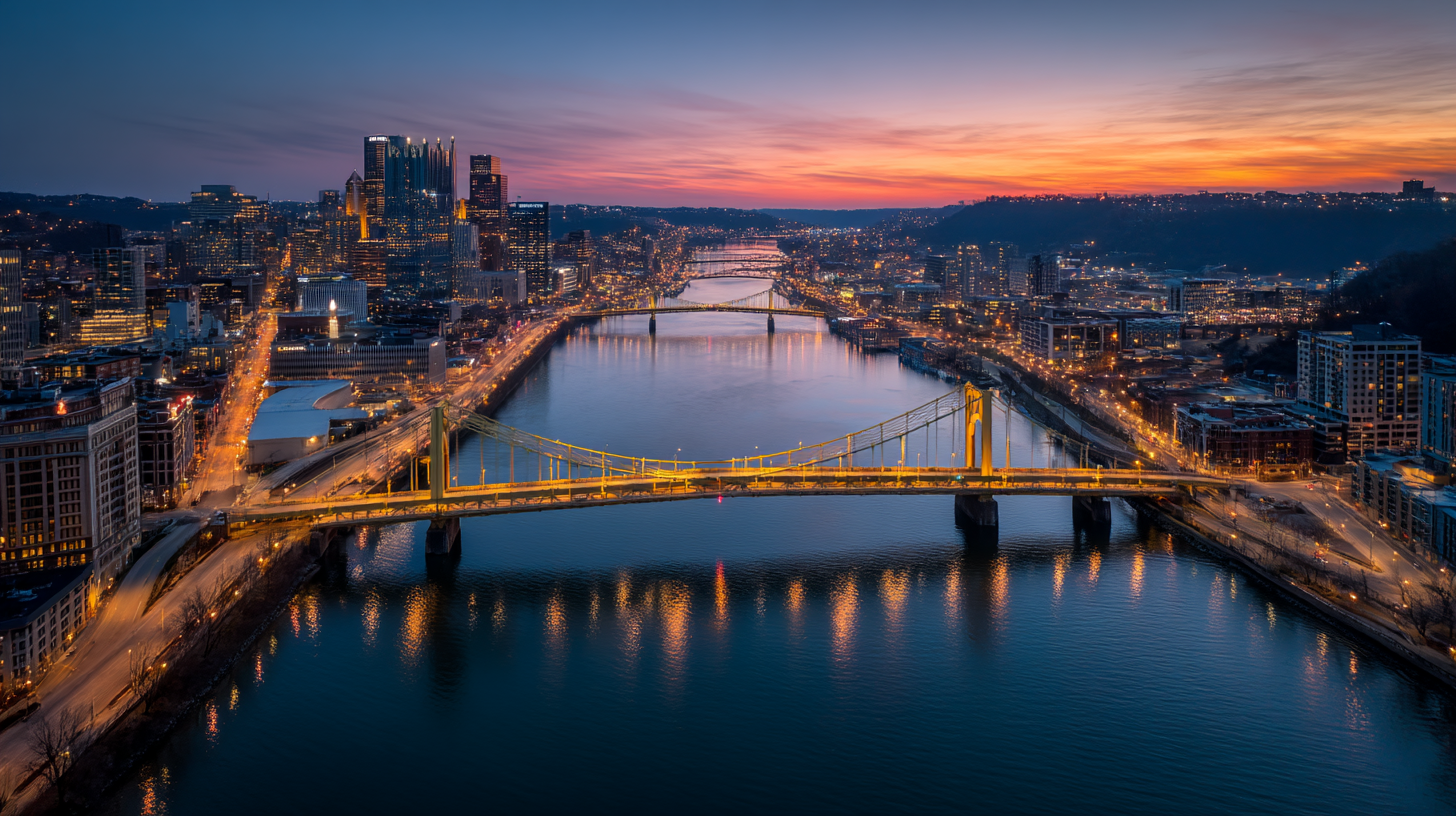
For years, Pittsburgh has been known as one of the most affordable cities in the northeastern United States. Low rents, reasonable home prices, and a manageable cost of living attracted newcomers from more expensive metropolitan areas. But as the city has grown, added new development, and gained national attention, the question arises: Is Pittsburgh still affordable in 2026?
This analysis examines current rental trends, compares prices across neighborhoods, and helps renters understand what to expect when searching for an apartment in Pittsburgh this year.
The Short Answer
Pittsburgh remains significantly more affordable than most major East Coast cities. However, affordability has eroded in certain popular neighborhoods and for certain property types. Renters willing to live outside the trendiest areas or in older buildings can still find good value. Those set on luxury new construction in the Strip District or Lawrenceville will pay premium prices.
The city offers a wide spectrum of rental options. A one bedroom apartment can cost anywhere from $800 in an affordable neighborhood to $2,500 in a luxury building. This range means that affordability is still available, but it requires knowing where to look.
Rental Price Trends 2020 to 2026
Over the past six years, Pittsburgh’s rental market has seen steady increases, though the pace has moderated recently.
Refer a tenant, get $100
Know someone looking for a house or apartment for rent in Pittsburgh? If they sign a lease with us, we pay you $100.
2020 to 2022: The pandemic brought a surge of remote workers seeking affordable cities. Pittsburgh saw increased demand, particularly for apartments with home office space and outdoor access. Rents rose approximately 5 to 8 percent annually during this period.
2023 to 2024: New construction deliveries in the Strip District, East Liberty, and Lawrenceville added inventory, moderating price increases. Rents stabilized in some neighborhoods while continuing to rise in others.
2025 to 2026: The market has found a new equilibrium. Luxury units continue to command premium prices, while older buildings in moderate neighborhoods have seen modest increases. Overall, rent growth has slowed to approximately 3 to 4 percent annually.
The table below shows estimated one bedroom rent changes in select neighborhoods.
| Neighborhood | 2020 Avg Rent | 2023 Avg Rent | 2026 Avg Rent | 6 Year Change |
|---|---|---|---|---|
| Strip District | $1,600 | $1,900 | $2,000 | +25% |
| Lawrenceville | $1,200 | $1,550 | $1,650 | +38% |
| Shadyside | $1,300 | $1,650 | $1,800 | +38% |
| Squirrel Hill | $1,100 | $1,400 | $1,500 | +36% |
| Dormont | $800 | $1,000 | $1,100 | +38% |
| Greenfield | $750 | $950 | $1,000 | +33% |
Lawrenceville, Shadyside, and Dormont saw the largest percentage increases as demand for these neighborhoods grew. The Strip District already had high rents in 2020, so the percentage increase was lower though the dollar increase was substantial.
Affordability by Neighborhood in 2026
Premium Neighborhoods (One Bedroom $1,500 and Above)
The Strip District, downtown, North Shore, Lawrenceville, and Shadyside fall into this category. These neighborhoods offer walkability, dining, nightlife, and often new construction. Renters here pay for location and amenities.
In these areas, affordability depends on perspective. For a renter relocating from New York or San Francisco, $1,800 for a one bedroom in Lawrenceville feels like a bargain. For a local renter on a Pittsburgh salary, that same apartment may be out of reach.
Moderate Neighborhoods (One Bedroom $1,000 to $1,500)
Squirrel Hill, South Side, Oakland, East Liberty, Dormont, and Ross Township fall into this category. These neighborhoods offer good locations at more attainable prices. Some, like Dormont, offer T light rail access to downtown. Others, like Squirrel Hill, offer walkable commercial districts.
This range represents the best value for many renters. The neighborhoods are established, safe, and convenient without the premium prices of the trendiest areas.
Affordable Neighborhoods (One Bedroom Under $1,000)
Greenfield, Carnegie, Bellevue, Crafton, Millvale, and Highland Park fall into this category. These neighborhoods offer functional housing in residential settings with reasonable commutes to downtown.
Renters in these areas typically live in older buildings with basic finishes and limited amenities. However, the savings are substantial. A renter who pays $900 in Greenfield instead of $1,800 in Lawrenceville saves $10,800 per year.
Factors Affecting Affordability in 2026
New Construction Premium
New luxury buildings command significant premiums over older buildings. A one bedroom in a new Strip District building rents for $2,000 to $2,300. A one bedroom in a 1920s building in the same neighborhood, if available, would rent for significantly less. Renters who prioritize modern finishes and amenities pay for them.
Parking Costs
Parking adds $50 to $200 per month to housing costs in many neighborhoods. In premium areas, garage parking is often an additional fee. In affordable neighborhoods, parking is frequently included or available at lower cost. Renters should factor parking into their total monthly outlay when comparing apartments.
Utility Costs
Older buildings, which dominate affordable neighborhoods, often have higher heating costs due to less efficient windows and insulation. A $900 apartment with $150 monthly winter heating bills may cost as much as a $1,000 apartment with $50 heating bills. Renters should ask for average utility costs.
Transit Access
Neighborhoods with T light rail or frequent bus service offer the opportunity to eliminate downtown parking costs. A renter in Dormont paying $1,100 for rent but taking the T to work may spend less overall than a renter in a $1,000 apartment who drives and pays $200 for parking.
Salary Needed to Rent Comfortably in 2026
Using the guideline of spending no more than 30 percent of gross income on rent, the required annual salary for different rental levels is:
| Monthly Rent | Annual Salary Needed (30% rule) | Typical Neighborhood |
|---|---|---|
| $800 | $32,000 | Greenfield, Carnegie |
| $1,000 | $40,000 | Dormont, Bellevue |
| $1,200 | $48,000 | Squirrel Hill, South Side |
| $1,500 | $60,000 | Lawrenceville, Shadyside |
| $1,800 | $72,000 | Strip District, North Shore |
Pittsburgh’s median household income is approximately $70,000. This suggests that the average household can comfortably afford a one bedroom in the moderate to premium range. However, individual circumstances vary significantly.
Is Pittsburgh Still Affordable Compared to Other Cities?
Yes, Pittsburgh remains substantially more affordable than most major US cities. The table below shows one bedroom rents in select cities for comparison.
| City | Average One Bedroom Rent |
|---|---|
| New York City | $4,200 |
| Miami | $2,600 |
| Chicago | $2,200 |
| Philadelphia | $1,900 |
| Austin | $1,800 |
| Pittsburgh | $1,550 |
Pittsburgh is approximately 25 percent less expensive than Philadelphia, 30 percent less than Austin, 40 percent less than Chicago, and 60 percent less than New York. For renters moving from higher cost areas, Pittsburgh still feels very affordable.
Where Affordability Has Eroded Most
The neighborhoods that have seen the largest rent increases since 2020 are Lawrenceville, Shadyside, and Dormont. Lawrenceville’s transformation from an industrial corridor to a dining destination drove demand. Shadyside’s established appeal continued to attract professionals. Dormont’s T access and walkable commercial district became more widely recognized.
In these neighborhoods, renters who secured units before the increases have benefited. New renters entering the market face higher prices.
Where Affordability Remains Strong
Greenfield, Carnegie, Bellevue, Crafton, and the West End have seen more moderate increases. These neighborhoods lack the dining scenes and nightlife of trendier areas, but they offer functional housing, reasonable commutes, and parking. For renters who prioritize budget over amenities, these areas remain strong options.
Predictions for the Remainder of 2026
The Pittsburgh rental market is expected to remain stable for the rest of 2026. Several factors support this outlook:
New construction continues. Several large apartment projects are under construction or recently completed, adding inventory to the Strip District, East Liberty, and Oakland. This supply helps moderate price increases.
Remote work patterns have stabilized. The influx of remote workers that drove early pandemic rent increases has slowed. Demand is now driven primarily by local employment growth rather than migration from coastal cities.
Interest rates remain elevated. High mortgage rates keep some potential homebuyers in the rental market, sustaining demand. However, this effect has been priced in over the past two years.
Overall, renters should not expect dramatic changes for the rest of 2026. Modest increases of 2 to 4 percent are likely in most neighborhoods.
Tips for Finding Affordable Rent in 2026
Be flexible on neighborhood. Expanding your search to include Greenfield, Carnegie, Bellevue, or Crafton rather than only Lawrenceville or Shadyside can save hundreds of dollars per month.
Consider older buildings. Units in buildings built before 1950 often have more space and lower rents than new construction. The trade off is older systems and fewer amenities.
Look for included parking. In neighborhoods where parking is included, you save $50 to $200 per month compared to apartments where parking is extra.
Calculate total monthly cost. Compare apartments based on rent plus parking plus estimated utilities. A $1,000 apartment with $100 parking and $150 heating may cost the same as a $1,200 apartment with free parking and $50 heating.
Use transit to save on parking. Renting near the T or a frequent bus line allows you to eliminate downtown parking costs. A $1,100 apartment in Dormont with free parking at home and no parking downtown may be a better value than a $1,000 apartment with paid parking at home and paid parking downtown.
Making the Decision
Pittsburgh remains an affordable city in 2026, particularly for renters who are flexible about neighborhood and building age. The city offers a wide spectrum of rental options, from $800 one bedrooms in residential neighborhoods to $2,500 luxury units in prime locations.
For renters moving from higher cost cities, Pittsburgh will feel very affordable. For local renters on Pittsburgh salaries, careful neighborhood selection is necessary to stay within budget. In either case, the city continues to offer good value compared to most major US metropolitan areas.
By understanding current price trends, focusing on neighborhoods that fit your budget, and calculating total monthly costs, you can find an apartment in Pittsburgh that meets your needs without breaking the bank. The city’s affordability is not what it was a decade ago, but it remains one of the best values in the northeastern United States.
Renting in the Pittsburgh area?
Ultrarix Capital Partners manages houses and apartments for rent across the Greater Pittsburgh area. Browse what is available now, or learn more about renting with us.
Browse available rentalsHouses and apartments for rent in Pittsburgh
Common questions about renting in Pittsburgh
How do I find houses and apartments for rent in Pittsburgh?
Start on our available rentals page, or see an overview of houses and apartments for rent in Pittsburgh. Tell us your budget and preferred neighborhoods and we will match you with homes that fit.
Which areas around Pittsburgh do you serve?
We cover the Greater Pittsburgh area, including city neighborhoods and nearby communities like Bellevue, McKees Rocks, Penn Hills, and Verona. The full list is on our homepage.
How do I apply for a rental?
Find a home you like on the rentals page and submit an application with your details, income, and rental history. We review it quickly and follow up with next steps.
Are utilities included?
We typically do not include utilities. For most rentals, electric, gas, water, and trash are the tenant's responsibility. Each listing notes anything that is included.
Do you allow pets?
Pet policies vary by property. Some rentals allow pets, sometimes with a deposit or monthly pet rent. Check the listing or ask us about a specific home.
Can I refer someone and get paid?
Yes. If you refer a tenant who signs a lease with us, we pay you $100. See our referral page for details.
How do I contact Ultrarix Capital Partners?
Call +1-650-254-6706 or email [email protected]. We are a Pittsburgh based property management company at 725 School St, McKees Rocks, PA 15136.