
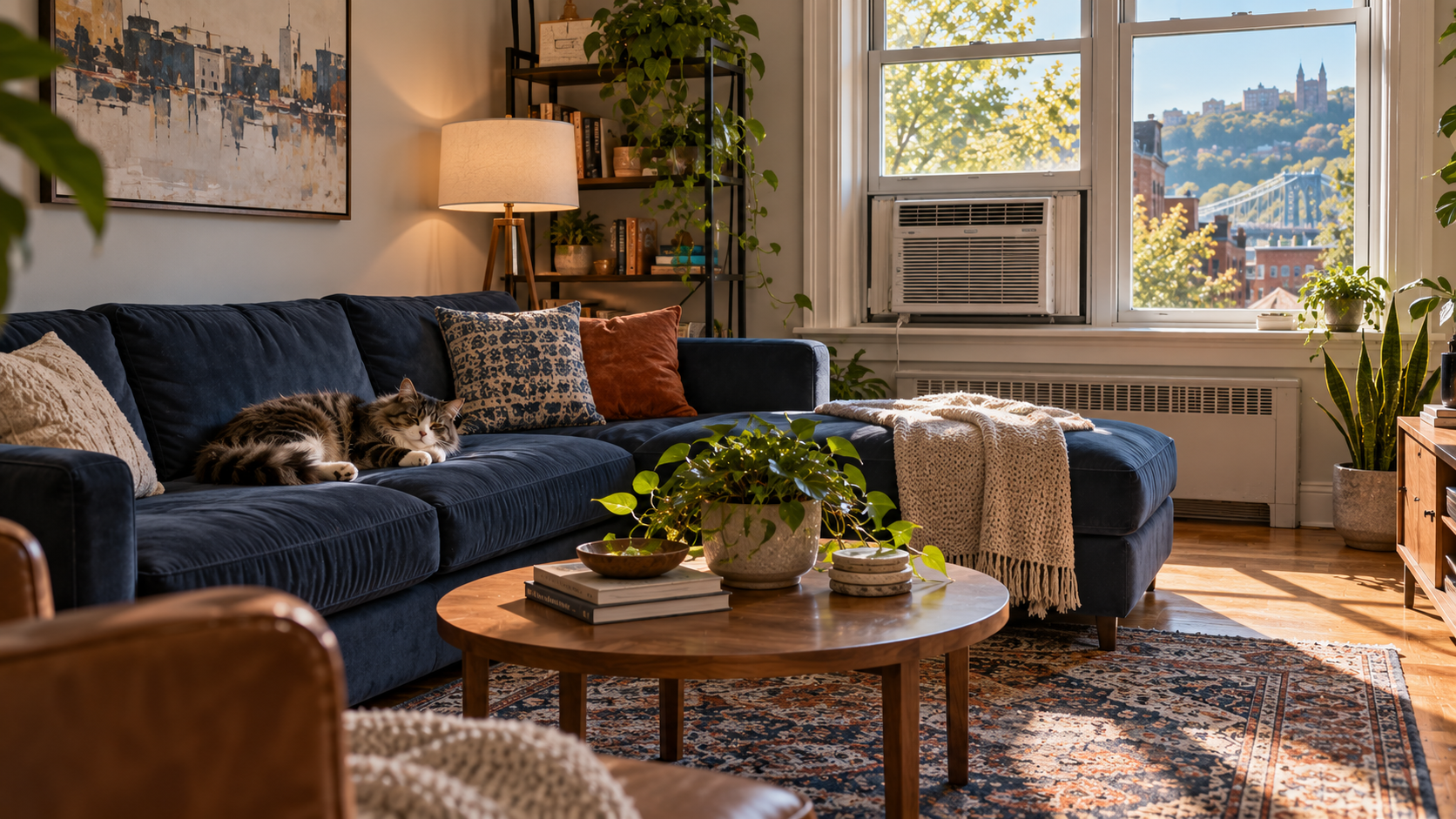
When the summer heat hits Pittsburgh, a window air conditioning unit can make the difference between a comfortable apartment and an unbearable one. However, installing a window AC unit involves more than just lifting it into place. Understanding the rules, safety requirements, and best practices can help you stay cool without damaging your apartment or risking your security deposit.
Know Your Lease and Landlord Rules
Before purchasing a window AC unit, check your lease. Some leases prohibit window units entirely due to building aesthetics, structural concerns, or electrical limitations. Others may require landlord approval and specify installation requirements.
If your lease does not address air conditioning, you generally have the right to install a window unit as long as you do not damage the property and install it safely. However, it is always wise to ask your landlord in writing before making any installation. This creates a record of your request and protects you if there is a dispute later.
In some jurisdictions, new laws are giving tenants more rights to install AC units. Effective July 2026, for example, Ontario law allows tenants to install window or portable AC units if they meet conditions like providing written notice to the landlord and installing safely. While Pittsburgh does not have a specific ordinance on tenant-installed AC units, the general principle is that tenants have the right to enjoy their rental, but they cannot cause damage or create safety hazards.
Window Unit vs. Portable Unit: Which to Choose?
If you are not sure whether a window unit is allowed or practical, consider a portable air conditioner. These units sit on the floor and vent through a window using a hose kit. They do not require permanent installation and are easier to move between rooms.
Refer a tenant, get $100
Know someone looking for a house or apartment for rent in Pittsburgh? If they sign a lease with us, we pay you $100.
Portable units are generally more renter-friendly. They do not require the heavy lifting or structural modifications that window units do. However, they are typically less efficient and more expensive to run. If you go with a portable unit, make sure the venting hose is installed properly to avoid hot air recirculating back into the room.
Window units are more efficient and cool better. They fit directly into the window frame and seal against the window, making them more effective at cooling a room. But they require secure installation and proper sealing to prevent them from falling or leaking air.
Safe Installation Guidelines
If you decide to install a window AC unit, follow these safety steps:
Choose the right window. Look for a window that opens vertically and has a sturdy sill. Avoid windows that are too high or too low, and make sure the window opens fully to accommodate the unit.
Use the mounting hardware that comes with the unit. Window AC units typically include brackets, bolts, and screws designed for secure installation. Do not skip these parts. Follow the manufacturer’s instructions carefully.
Secure the unit to the window frame. Most window units require metal brackets that attach to the window frame or sill. Use the provided screws and anchors to attach the bracket securely. Do not rely solely on the weight of the unit to hold it in place.
Install the side panels. Expand the accordion panels on each side of the unit to fill the gaps between the unit and the window frame. These panels block hot air from entering and prevent the unit from shifting.
Close the window securely. The window should close down firmly against the top of the unit. Many units come with a weather seal or foam strip to fill the gap between the window and the unit.
Test the installation. After installing, gently push the unit from outside to ensure it is secure. If it shifts or feels loose, adjust the brackets and tighten the screws.
Use a support bracket for heavy units. If the unit weighs more than 75 pounds, or if you are installing it in a second-floor window, consider using a support bracket that attaches to the exterior wall or sill. These brackets reduce strain on the window and prevent the unit from falling.
Seal around the unit. Use foam insulation strips to seal gaps between the unit and the window frame. This prevents hot air from entering and improves efficiency.
Electrical Safety Considerations
Window AC units draw significant power. Before plugging one in, check the electrical capacity of your circuit. Most units require a dedicated 15-amp circuit. If you plug a high-wattage unit into a circuit that also powers other appliances, you may trip the breaker.
Avoid using extension cords with window AC units. Extension cords can overheat and cause a fire. If you must use one, choose a heavy-duty cord rated for the unit’s amperage and keep it as short as possible.
Plug directly into a wall outlet. Use a grounded three-prong outlet. Do not remove the grounding prong or use an adapter.
Test the outlet. Before plugging in, confirm the outlet is working by testing it with a lamp or phone charger.
Carbon Monoxide Risk: A Hidden Danger
One overlooked safety issue with window AC units is the risk of carbon monoxide entering the home. When a window AC unit is installed, it can disrupt the ventilation balance of the home. If the unit creates negative pressure, it can pull air down from chimneys or exhaust vents, potentially drawing carbon monoxide from gas appliances like furnaces or water heaters.
Install a carbon monoxide detector near your AC unit. This is especially important if you have gas appliances in your home. A detector can alert you if carbon monoxide is being pulled into your living space.
Follow the manufacturer’s installation instructions. Proper installation reduces the risk of ventilation problems. If you are unsure about the installation, consult a professional.
Test your carbon monoxide detector regularly. Replace batteries at least once a year and test the unit monthly.
What to Do If Your Landlord Says No
If your lease prohibits window AC units or your landlord refuses to allow one, you have a few options:
Ask for a reasonable accommodation. If you have a medical condition that requires cooling, you may be able to request a reasonable accommodation under fair housing laws. You will likely need documentation from a healthcare provider.
Consider a portable unit. Some leases prohibit window units but allow portable units. Check your lease or ask your landlord directly.
Negotiate with your landlord. Offer to pay for the installation, use a professional installer, or agree to remove the unit at the end of the summer. Sometimes a simple conversation can resolve the issue.
Check local regulations. Some cities have laws that require landlords to allow tenants to install air conditioning under certain conditions. Pittsburgh does not have a specific ordinance, but it is worth checking if your local housing authority has any guidance.
Key Takeaways
| Consideration | What to Do |
|---|---|
| Check your lease | Look for restrictions on window units |
| Get written approval | Ask your landlord before installing |
| Choose the right window | Use a sturdy, vertically opening window |
| Install securely | Use all provided mounting hardware |
| Seal around the unit | Prevent air leaks with foam insulation |
| Check electrical capacity | Avoid overloading circuits |
| Install CO detector | Protect against carbon monoxide risk |
| Consider a portable unit | Easier to install, more renter-friendly |
Installing a window AC unit can keep you comfortable through Pittsburgh’s hot summer months. By following safety guidelines and respecting your lease terms, you can stay cool without creating problems for yourself or your landlord. If you are ever unsure about any step of the process, consult a professional or ask your landlord for guidance.

Renting in the Pittsburgh area?
Ultrarix Capital Partners manages houses and apartments for rent across the Greater Pittsburgh area. Browse what is available now, or learn more about renting with us.
Browse available rentalsHouses and apartments for rent in Pittsburgh
Common questions about renting in Pittsburgh
How do I find houses and apartments for rent in Pittsburgh?
Start on our available rentals page, or see an overview of houses and apartments for rent in Pittsburgh. Tell us your budget and preferred neighborhoods and we will match you with homes that fit.
Which areas around Pittsburgh do you serve?
We cover the Greater Pittsburgh area, including city neighborhoods and nearby communities like Bellevue, McKees Rocks, Penn Hills, and Verona. The full list is on our homepage.
How do I apply for a rental?
Find a home you like on the rentals page and submit an application with your details, income, and rental history. We review it quickly and follow up with next steps.
Are utilities included?
We typically do not include utilities. For most rentals, electric, gas, water, and trash are the tenant's responsibility. Each listing notes anything that is included.
Do you allow pets?
Pet policies vary by property. Some rentals allow pets, sometimes with a deposit or monthly pet rent. Check the listing or ask us about a specific home.
Can I refer someone and get paid?
Yes. If you refer a tenant who signs a lease with us, we pay you $100. See our referral page for details.
How do I contact Ultrarix Capital Partners?
Call +1-650-254-6706 or email [email protected]. We are a Pittsburgh based property management company at 725 School St, McKees Rocks, PA 15136.